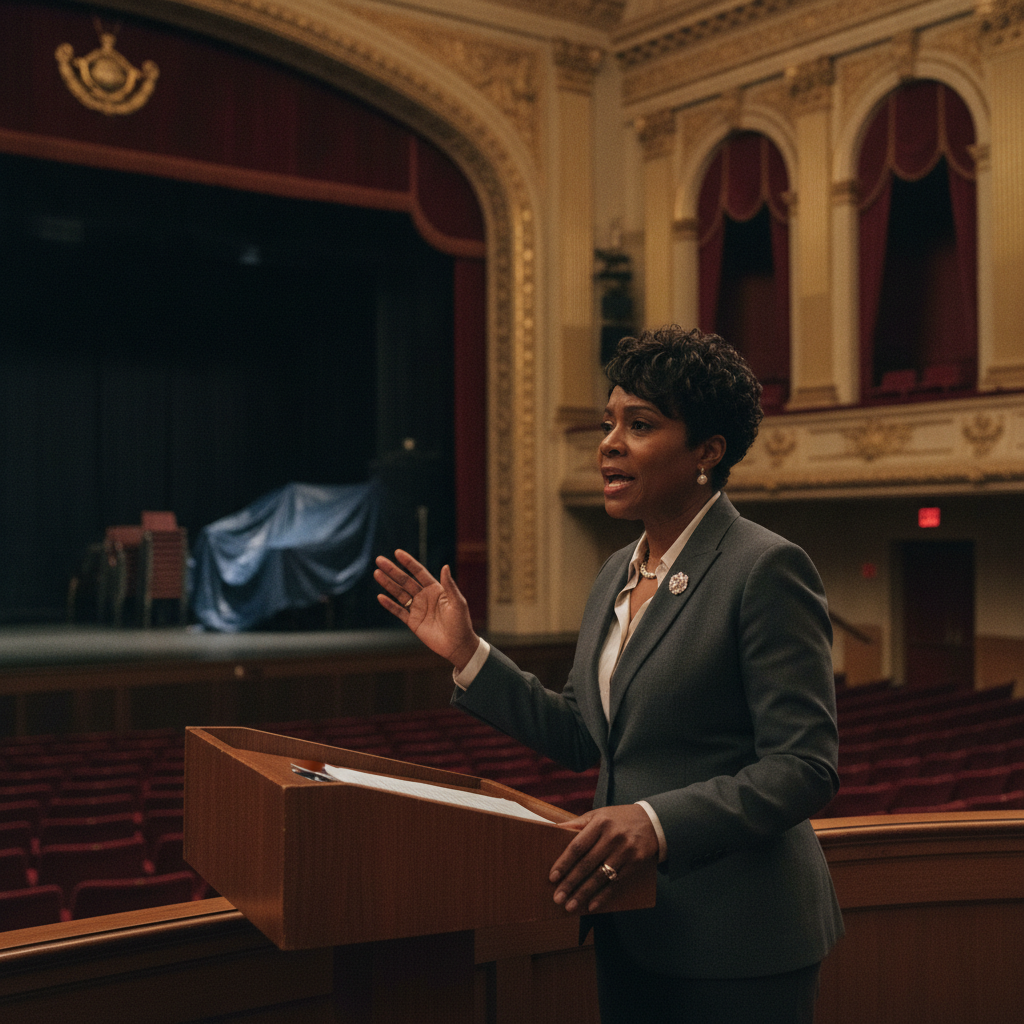
U.S. Representative Joyce Beatty publicly criticized the management of a major national performing arts center after the venue sat without scheduled programming and portions of its interior were covered. In pointed remarks, Beatty described the facility as a “lifeless husk” and called the visible tarps a “petty act of defiance,” signaling deep frustration over the current state of affairs.
Her comments came amid a period in which the center had no events on its calendar, leaving public spaces typically filled with performances, rehearsals and visitors largely empty. The presence of coverings — described by Beatty as tarps — has become a focal point for criticism, portrayed as a symbolic and physical barrier between the institution and the community it serves.
The lawmaker’s critique highlights broader concerns about stewardship and the priorities of institutional leaders when flagship cultural venues go dark. For many observers, a lack of scheduled programming raises questions about how decisions are made, who is consulted, and how audiences and artists will be served during gaps in programming. Visible measures such as tarps can intensify those concerns by making the absence of activity more stark and immediate.
Representatives from the institution have not been quoted here, but the public exchange underscores tensions that can emerge between elected officials and cultural organizations when operational choices affect access and visibility. Local arts ecosystems, including performers, staff, and patrons, often feel the effects of programming pauses quickly, and the optics of a covered, inactive stage can deepen anxieties about the future direction of a venue.
Observers of the performing arts sector say clear communication and transparent planning are critical during any operational lull. Restoring regular programming or explaining the timeline for reopening spaces can help rebuild public confidence and ensure that artists and audiences remain connected to the institution.
In short, the lawmaker’s remarks serve as a sharp public rebuke focused on management decisions and their consequences for a prominent cultural space. The episode reinforces how leadership choices in arts institutions can provoke swift scrutiny and highlights the importance of maintaining public trust when a venue’s doors and stages are temporarily dark.



0 Comments