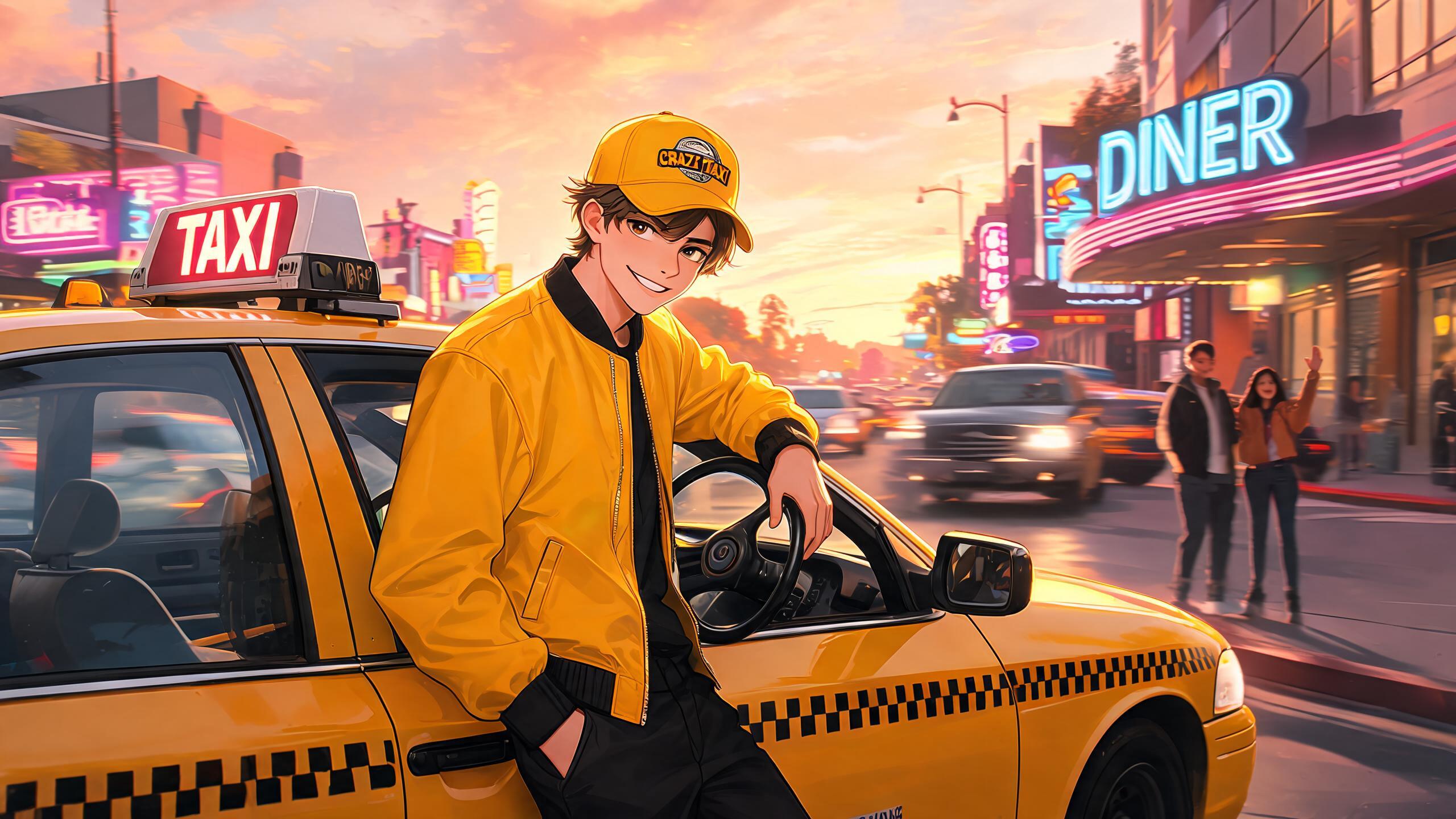
The cycle of adapting video games for screens has moved from marquee franchises to unexpected corners of gaming history. The announcement that a film based on the arcade classic Crazy Taxi is moving forward has crystallized a new reality for studios and streamers. What once began with obvious choices is now expanding into titles defined by short, joyful gameplay loops rather than sprawling narratives.
Crazy Taxi is a simple, fast arcade game built around a premise that is immediately cinematic. Players take the wheel as one of several drivers and race across a sun-baked fictional city to deliver passengers against the clock. The playable drivers include Axel, B.D. Joe, Gena, and Gus. Those characters and the game s kinetic energy are potent starting points for filmmakers. Still, the move from an arcade racer to a feature-length story raises predictable creative questions about how to expand a central mechanic into character arcs and stakes.
The decision to adapt a property like Crazy Taxi reflects larger calculations in the industry. Studios are looking for intellectual property that carries instant recognition or a hook that can be marketed quickly. Arcade nostalgia and the broad appeal of driving set pieces offer familiar entry points for audiences who might not be fans of the original game. The presence of licensed punk music in the original game helped define its tone, and music remains a reliable marketing lever for adaptations.
This moment also shows how varied the source material can be. Earlier waves of video game adaptations prioritized titles with built-in narratives, or with enough world building to support a film or television series. Examples include adaptations of platformers, survival horror games, and expansive action-adventure titles. The current phase proves studios are willing to look beyond story-first games. The criteria now often include visual identity, trademark elements, and the potential for spectacle, not just an existing plot.
The economics are straightforward. Streaming platforms need a steady supply of content that can be branded and franchised. Films based on well-known game names, however niche, offer a degree of discoverability that original projects lack. Production companies and distributors see opportunities in converting arcade concepts into broadcast-friendly spectacles with car chases, stunts, and comedic passengers. These elements can be packaged to appeal to family and young-adult viewers, widening potential audience reach.
There are creative risks too. Adapting a short-form arcade game calls for the invention of new character depth, motivations, and sometimes antagonists. Filmmakers must decide whether to lean into camp and nostalgia, build a grounded world that reinterprets the source material, or find a tonal middle ground. The characters Axel, B.D. Joe, Gena, and Gus could be presented as archetypes, allowing writers to explore different genres from buddy comedy to action caper. Each choice brings trade-offs in terms of fan reception and broader audience appeal.
The Crazy Taxi development also highlights a trend in how franchises are stewarded. Some adaptations aim to reinvent their source material, while others replicate the experience in live-action or animation. The difference affects casting, production design, and marketing. For instance, a film that emphasizes the game s frenetic driving will make stunt coordinators and visual effects vendors essential to the budget. If the adaptation prioritizes character dynamics, screenwriters and actors will carry more weight in shaping public perception.
From the audience perspective there is a mix of curiosity and fatigue. Longtime gamers and casual viewers have different expectations. Some welcome the reinterpretation of underused properties as fresh creative playgrounds. Others worry the pipeline will prioritize name recognition over strong storytelling. The debate is less about the legitimacy of adapting any single title and more about whether the steady stream of licensed adaptations will yield consistently compelling work.
The Crazy Taxi announcement feels less like an isolated experiment and more like a milestone in an ongoing trend. It signals that studios are willing to convert kinetic gameplay loops into cinematic products. That willingness will likely produce a wide range of outcomes, from surprising successes to projects that struggle to justify their existence beyond brand recognition.
Roundup opinion
The move to adapt Crazy Taxi is an indicator, not a verdict. It shows how the industry s appetite for recognizable intellectual property is broadening to include arcade-era classics. This can open doors for creative teams to expand short-form game concepts into full narratives, but it also increases pressure on filmmakers to deliver entertainment that stands on its own merits. For audiences, the best result will be adaptations that retain the unique energy of their sources while offering fresh storytelling and fully realized characters. The Crazy Taxi point of the boom will be remembered as the moment when the video game movie pipeline embraced kinetic, unconventional ideas in pursuit of new franchises and audience attention.







0 Comments