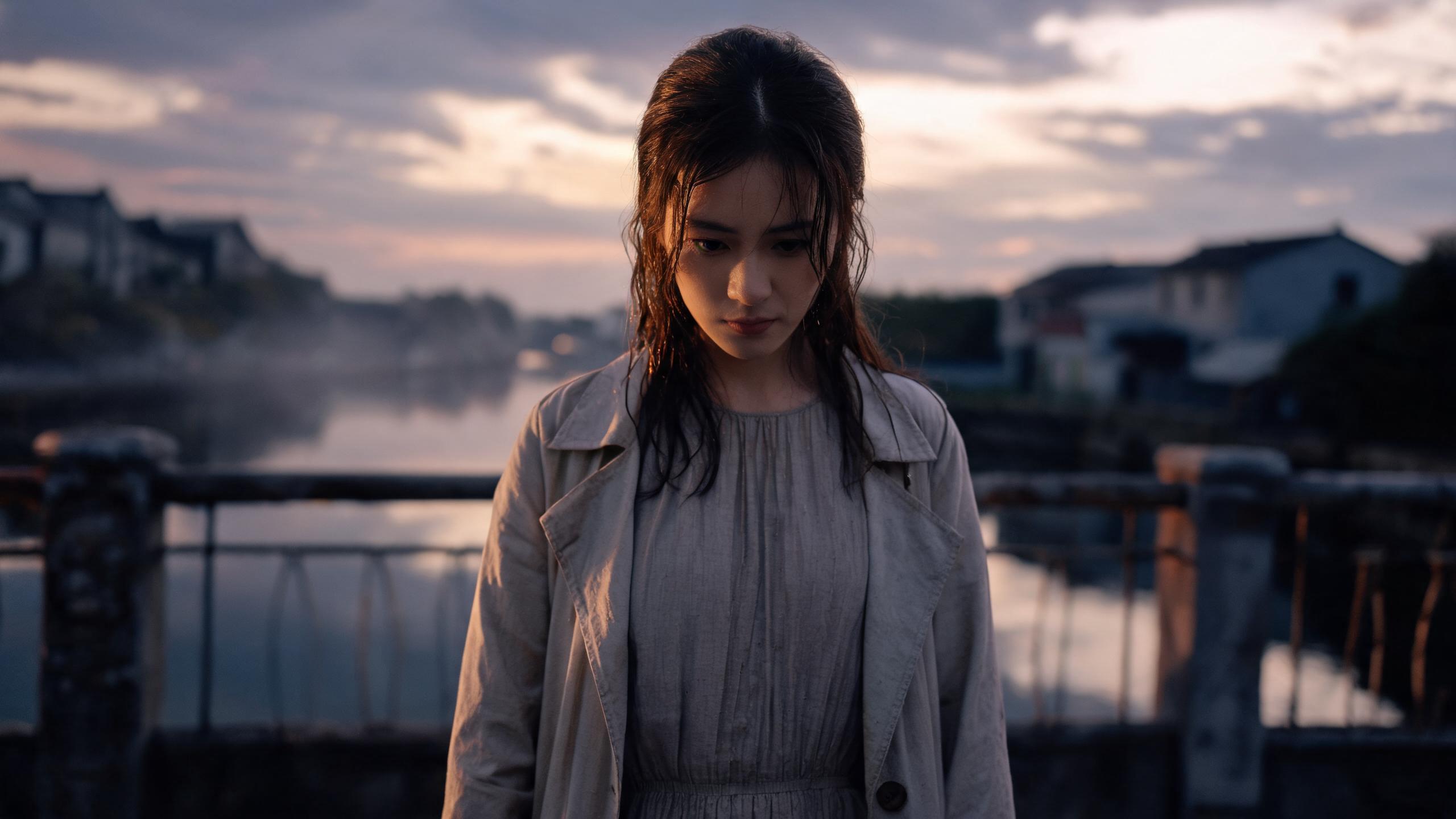
The Other Side of the Bridge opens with a quiet image that soon gives way to escalating pressure. At its heart the film tracks Ada and Kola, two people whose lives collide after a tragic event on a riverside road. What begins as a personal story of loss and responsibility expands into a tense portrait of how truth, loyalty, and grief can alter ordinary lives. The film delivers on both emotional depth and physical stakes, and ultimately leaves the viewer invested in its characters long after the credits roll.
Ada is portrayed with careful restraint. She carries the weight of the story, moving from stunned disbelief to a fierce determination to find answers. Kola provides a different but complementary arc. His mix of guilt and stubbornness creates friction with Ada that fuels the film. Inspector Danladi appears as the institutional force that frames the conflict, testing both leads with procedures and moral detachment. These three figures form the story’s emotional triangle and the actors give them enough texture to feel fully human rather than archetypal.
The screenplay is structured to reveal information deliberately. Scenes that might have served as straightforward exposition become opportunities to explore how memory and rumor can twist a single event into multiple versions of the truth. The film avoids obvious plot contrivances. Instead it trusts the psychology of its characters. This allows quieter moments to linger: a lingering look between Ada and Kola, a conversation with a neighbor, a small ritual of mourning. Those sequences are where the film earns its emotional power.
When the film shifts into action, the transition is credible. The director stages tense sequences with a focus on immediacy rather than spectacle. A chase across the bridge feels perilous because of tight framing and a steady, human-scale camera. Violence is not glamorized. Instead it functions as a consequence, a rupture that forces the characters to respond. The action serves the narrative rather than existing for its own sake, and that makes each confrontation feel earned.
Visually the film favors natural light and muted tones. Cinematographer Ngozi Nwankwo captures the riverside setting with a kind of rugged beauty, using cloudy skies and evening light to underline the film’s melancholy. Close-ups are used judiciously to register shifts in emotion. Production design keeps the world specific and lived-in, from Ada’s small flat to the cluttered police station. These details build a sense of place that grounds the story beyond the immediate drama.
Sound and music contribute quietly but effectively. The score rarely overwhelms a scene; instead it underscores emotion at strategic moments. Ambient sound is layered to bring out the setting: water lapping at the bank, the distant sound of traffic, the hum of a generator. Those subtle elements add to the film’s realism and let the performances breathe.
Supporting players add vital color and context. A neighbor named Amara provides moments of warmth and a different perspective on the central event. A local journalist, Moses, moves the plot forward and raises questions about public scrutiny and rumor. These roles do more than advance the plot. They help populate the film’s world and remind the audience that a single incident touches many lives.
Pacing is one of the film’s strengths. It resists the temptation to linger too long on any single beat and avoids rushing through key revelations. With a runtime that feels compact yet complete, the story moves in a way that keeps the viewer engaged without exhausting emotional momentum. The director’s hand is confident without calling attention to itself, and the editing preserves tension while allowing necessary reflection.
The Other Side of the Bridge is not without flaws. A subplot involving local corruption feels underdeveloped and could have benefited from more screen time. A few characters are sketched in rather than fully explored. Yet these are blemishes against a film that largely sustains its chosen tone and focus. The result is a drama that balances introspective moments with credible action, anchored by performances that make the stakes feel real.
In the end the film succeeds where it matters most. It respects its audience enough to let emotion and consequence evolve naturally. Ada, Kola, and Inspector Danladi are characters written and performed with intention, and their journeys provide both heartbreak and catharsis. For viewers who appreciate character-driven stories that can still deliver gripping sequences, The Other Side of the Bridge is a recommended watch.
Roundup opinion: The Other Side of the Bridge offers a restrained, rewarding blend of emotional drama and measured action. Its strengths lie in committed performances, careful pacing, and a clear sense of place. While not flawless, it is a thoughtful film that treats its subject with care and keeps viewers engaged from its quiet opening to its resolved finish.







0 Comments