
The film Mothers of Chibok arrives as a quiet but devastating work that insists the viewer sit with grief. Centered on three mothers drawn from a small Nigerian town, the film traces the day-to-day consequences of disappearance and violence on ordinary life. It is not a polemic. It is a human study that makes you feel as if you have lost a loved one, and that feeling is its central achievement.
The story follows Amina, Mariam, and Zainab, three women connected by the disappearance of their daughters. Amina keeps a place at the table where her child used to sit. Mariam organizes community searches and attends meetings with officials. Zainab sifted through rumors and social media posts, looking for some trace of her child. These are the anchors of the narrative. Each woman's arc is small in plot but vast in emotional range. The film resists dramatic spectacle and instead amplifies small gestures, which makes the heartbreak more immediate.
Cinematography leans into intimacy. The camera lingers on faces, hands, and objects that hold memory. There are long close-ups of eyes that have moved beyond tears and settled into something harder to name. Interiors are lit with natural light. Exteriors capture a town where everyday commerce proceeds alongside a persistent absence. The color palette favors muted earth tones and the occasional saturated flash in archival footage or a home video. Editing weaves present-day scenes with short flashbacks and domestic artifacts such as voice notes and wedding photos. This structure keeps the film from becoming didactic. Instead it creates an atmosphere of waiting.
Performances are the film's engine. The actors playing Amina, Mariam, and Zainab deliver restrained, precise work. Amina's grief is quiet and accumulative. One sequence in a market where she freezes in front of a stall sells school shirts becomes unbearable, not because of loud acting but because of the careful attention to body language. Mariam's public-facing anger and private exhaustion sit on the same face. Zainab's hope is threaded through with denial and small acts of faith. The supporting cast — neighbors, religious leaders, and a few weary officials — provide textures that keep the world feeling lived-in rather than stage-managed.
Sound and score are sparing, which suits the material. There is no swelling orchestral cue to tell the audience when to feel. Instead ambient sounds — the hum of a generator, distant market chatter, the scrape of a chair — create the environment. Moments of silence are used as punctuation. In one scene, the absence of any sound in a living room amplifies the way time seems to have stopped for those within it.
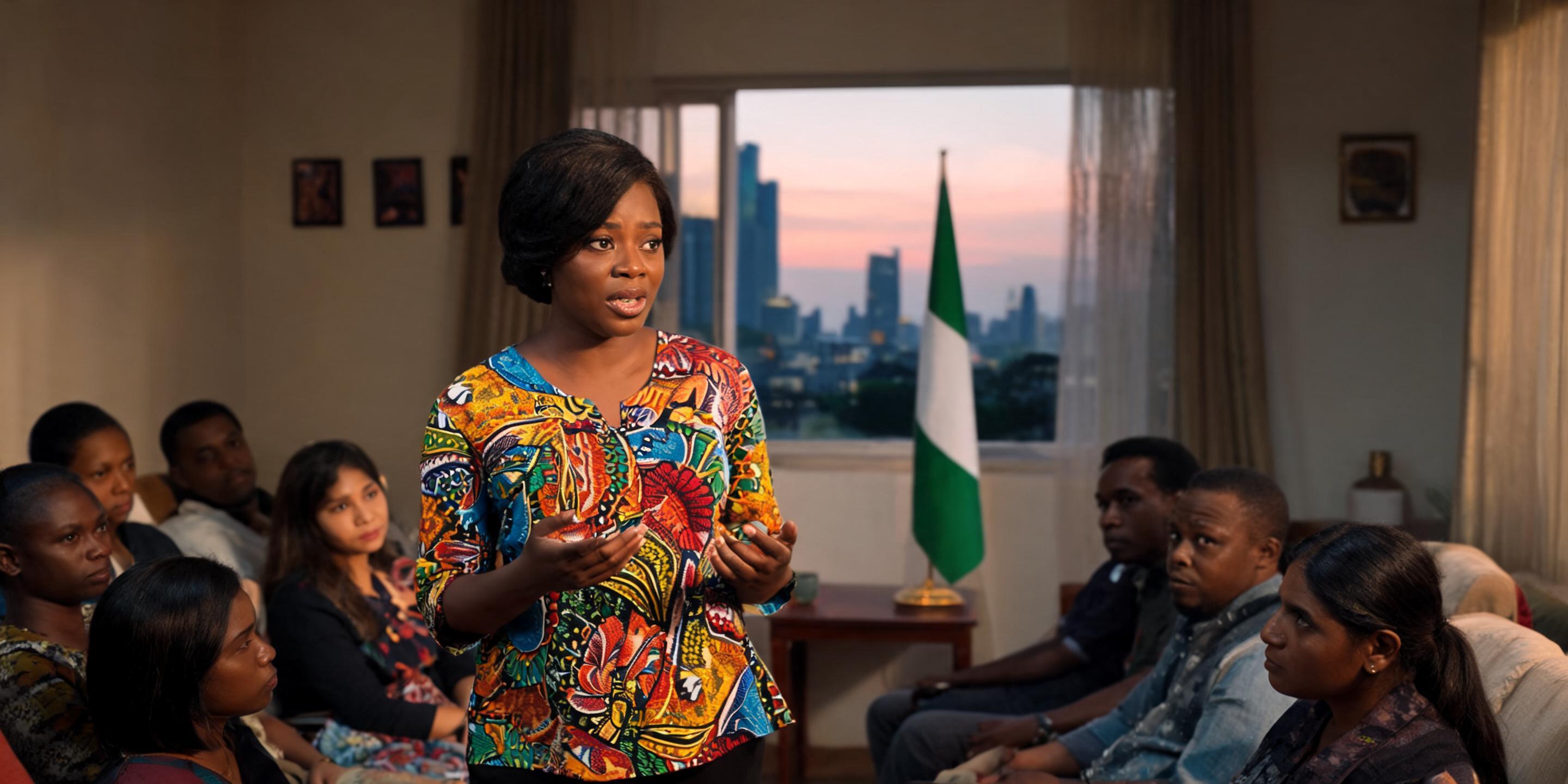
The screenplay favors scene work over exposition. Conversations are frequently elliptic. People talk around pain rather than name it. This can be frustrating at times because it demands patience, but it also mirrors how communities cope: through ritual, rumor, and small acts of solidarity. The film includes public gatherings, a tense town hall meeting, and a vigil. These sequences are handled with attention to nuance. The camera watches the mothers more than it watches the crowd, and the decision to center them ensures the film never loses sight of its primary subject.
There are ethical tensions that the film negotiates. It depicts real feeling without turning people into symbols. The filmmakers avoid sensationalizing trauma. Instead they commit to showing how grief can become a daily practice, how hope and despair coexist, and how bureaucracy and community responses shape lives. That balance is delicate. At times the film’s restraint may be read as distance, but more often it feels like respect.
Narrative momentum is not the film's main concern. There is no neat resolution. The search continues, and that unresolved quality is part of the emotional power. The final sequences do not offer closure but they do deepen understanding. Viewers who expect tidy storytelling may find the film challenging. Those willing to sit with unease will find a work that rewards attention.
Mothers of Chibok is a film about presence born from absence. The everyday objects, the ritualized gatherings, and the private, unguarded moments combine to form an account that is exacting and humane. It asks the audience to experience loss rather than explain it away.
The film will not provide catharsis. Instead it offers a framework for empathy. For viewers interested in craft, the film provides lessons in how understatement, precise acting, and careful production design can create emotional force. For anyone interested in stories about families and resilience, it offers a sober, thoughtful portrait. It is a difficult watch, but its difficulty is the point.
Seen as a whole, Mothers of Chibok demonstrates how film can connect an audience to distant pain without exploiting it. It does this by refusing drama for drama’s sake and by letting the interior lives of Amina, Mariam, and Zainab guide the viewer. The result is a film that lingers, and after the credits it is likely the faces of its characters will stay with you.








0 Comments