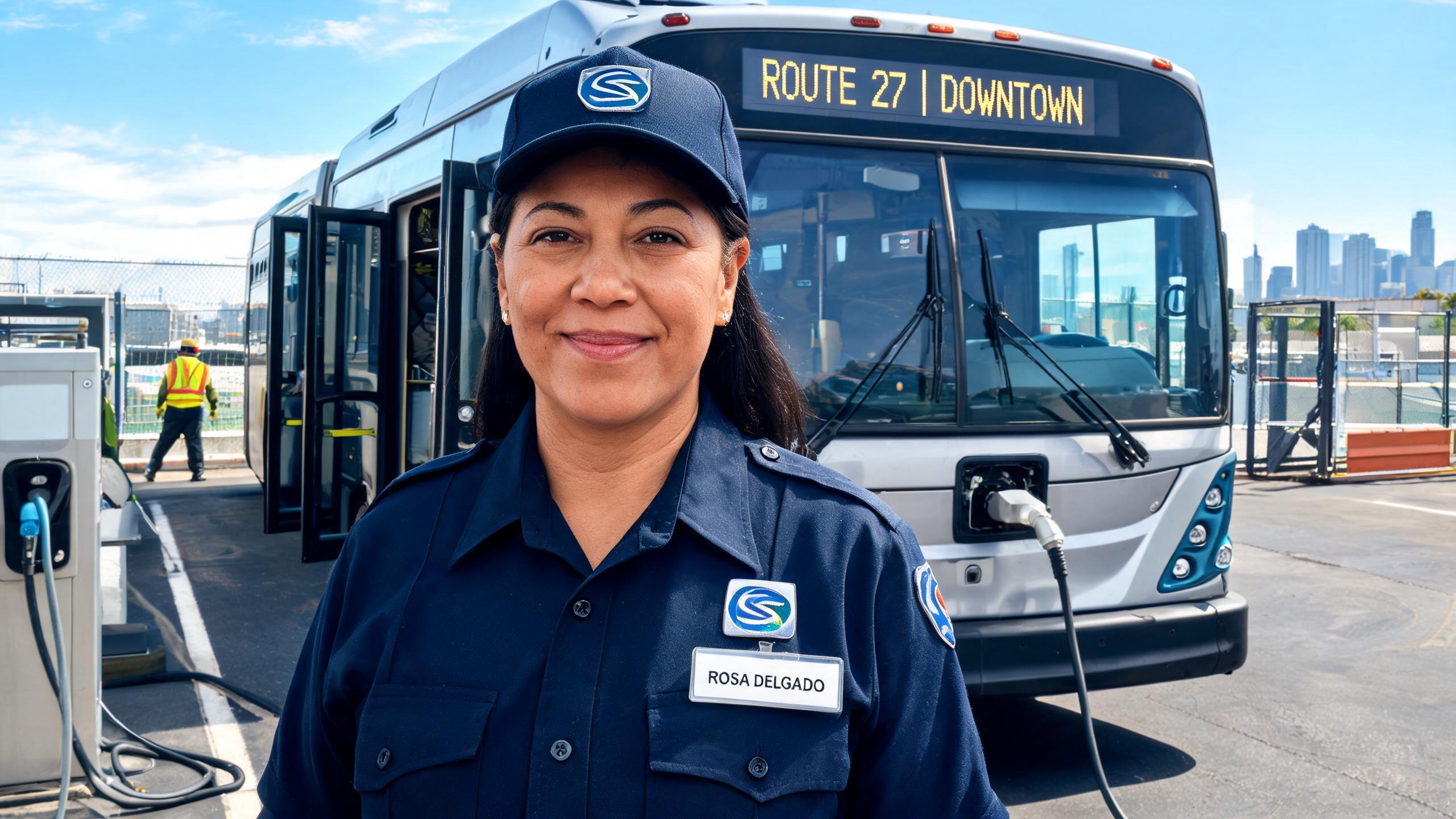
Metropolitan City began operating its first all electric bus fleet this week, a visible move in the citys ongoing efforts to modernize public transit and reduce local emissions. Mayor Lina Torres stood alongside transit officials at the central depot as the first vehicles pulled out for service, describing the rollout as a practical advancement for daily commuters and the urban environment.
The initial shipment includes 50 zero emission buses that will serve four high ridership routes. Marcus Lee, director of the Metropolitan Transit Authority, laid out the operational plan. The fleet will be phased into regular service over the next month while the agency monitors performance and passenger experience. A new network of depot chargers has been installed to support overnight replenishment of battery capacity. Lee said the program emphasizes reliability for riders and predictability for drivers.
Engineering and design choices guided much of the purchase. Dr. Aisha Ndiaye, chief engineer for the transit authority, explained that the agency evaluated models from several manufacturers and prioritized range, charging time, and maintenance access. These buses are equipped with modular battery packs that can be serviced more quickly than older integrated systems. The vehicles also feature low floors for easier boarding and additional space for wheelchairs and strollers.
Drivers and frontline staff were part of pilot trials prior to the public launch. Rosa Delgado, a driver with 12 years on the route, said the vehicles have a different feel but are straightforward to operate. She noted quieter cabins and smoother acceleration. Delgado also praised the training program that included simulated charging procedures and emergency protocols. The transit authority has committed to continued training as routes expand.
Passengers met the new buses with mixed but largely positive reactions. Samuel Kim, a daily commuter, said the ride felt calmer and less noisy than diesel buses. Other riders asked for more frequent service and clearer real time signage at some stops. To capture public response, the authority deployed surveys and onboard staff to gather feedback during the first week of service. The results will inform scheduling adjustments and the location of rapid charging hubs.
Officials highlighted environmental and public health considerations. Switching a single diesel bus to electric is estimated to reduce local particulate emissions and nitrogen oxides, pollutants linked to respiratory conditions. While citywide impact depends on scale and electricity sources, the transit authority is coordinating with the municipal power utility to increase renewables in the charging mix. This alignment aims to maximize the climate benefits of electrifying transit.
Financing for the project combined municipal bonds, a federal clean transportation grant, and a contribution from the transit authority reserve. Priya Shah, the citys finance officer, explained that the upfront cost is higher than purchasing conventional buses, but lifecycle analyses show lower fuel and maintenance expenses. Shah said the city expects to achieve net operating savings within a decade, contingent on stable electricity prices and continued reductions in battery costs.
Operational challenges remain part of the rollout story. Depot space was a constraint during upgrades and some older routes will require modification to accommodate charging windows. Marcus Lee acknowledged that maintenance staff needed new skills and that spare part supply chains for battery modules will be actively managed. The transit authority has arranged partnerships with local technical colleges to build a pipeline of technicians trained in electric vehicle systems.
Community groups and local businesses were invited to an open house at the depot that showcased the buses and charging equipment. Small business owner Mariam Okafor said she appreciated the opportunity to see the technology up close and ask practical questions about service schedules and potential impacts on deliveries. Neighborhood associations have requested that the authority publish a multi year plan that details when additional electric vehicles will be added to routes in each ward.
The initial deployment is described by officials as a test bed for broader electrification. Data on energy use, reliability, rider satisfaction, and maintenance costs will guide decisions for future purchases. Dr. Aisha Ndiaye said the authority will publish a summary of early performance metrics within three months. That transparency is intended to build public trust and give city planners information for scaling charging infrastructure.
The introduction of the electric fleet marks a visible shift in Metropolitan Citys approach to urban transport. The program brings new technology into daily life while prompting practical questions about infrastructure, funding, and workforce skills. For riders and staff the change is tangible now, and the next months will show how the pilot translates into long term improvements.
The citys approach balances operational caution and forward looking planning. As the transit authority collects data and responds to rider feedback, decisions about expansion will be driven by measurable outcomes. For now, the quiet of the new buses is a reminder that changes to shared mobility can be both immediate and incremental.
In the coming year residents can expect updates on route additions, charging network expansion, and published performance assessments. If the pilot meets its targets, Metropolitan City plans to order additional buses and accelerate its timeline for a fully electrified core network.
Roundup opinion
This rollout illustrates a practical route for cities that wish to modernize transit while managing costs and logistics. The program addresses vehicle technology, workforce readiness, and community engagement in parallel. Success will depend on how well the city translates pilot findings into steady improvements in frequency, reliability, and energy sourcing. For now commuters are riding in quieter buses and the city has a clearer picture of what it takes to make zero emission transit a routine part of urban life.











0 Comments