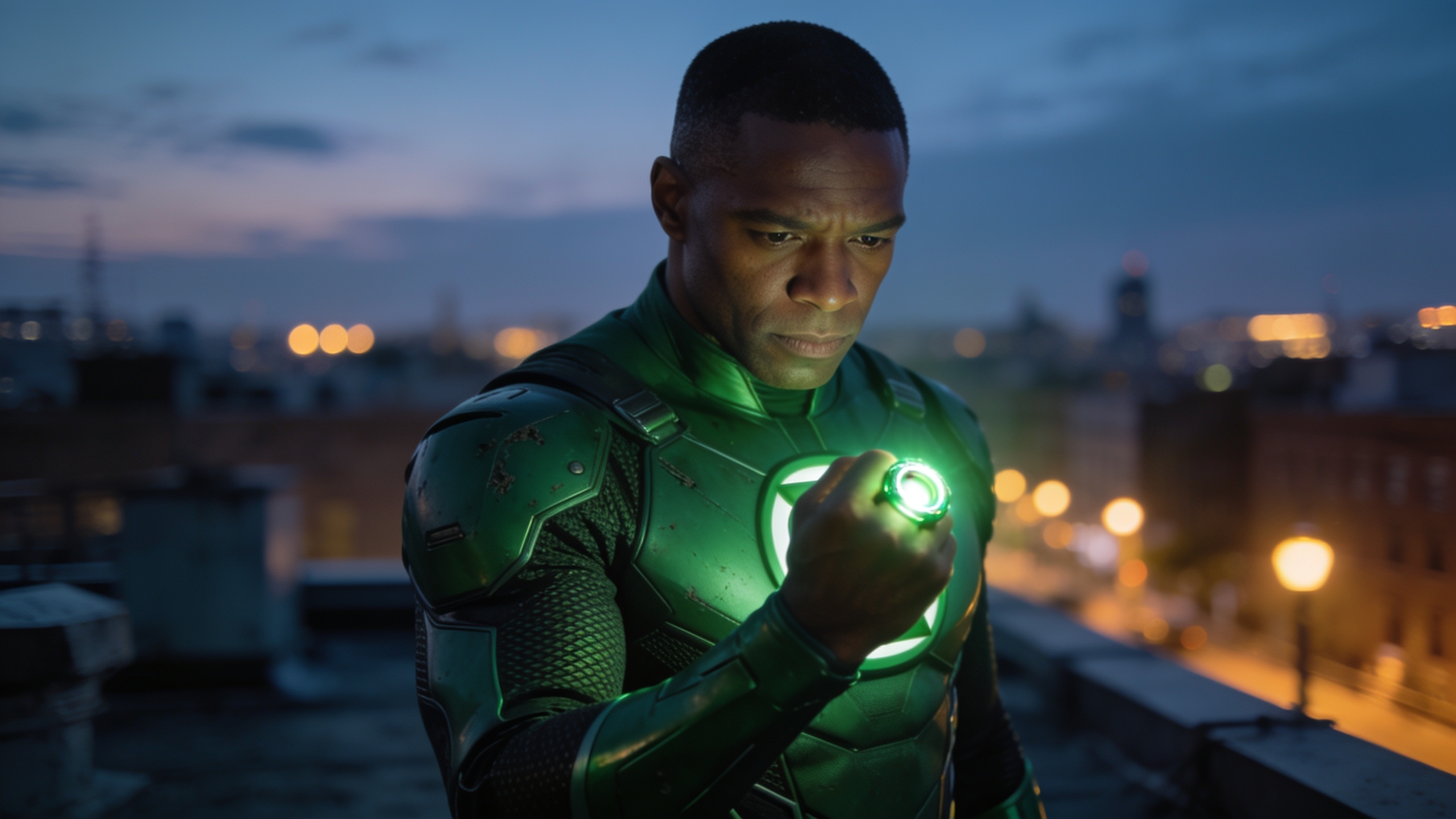
The Lanterns pilot opens with a collision of tone and temperament that quickly marks this as a series intent on reshaping how the DC Universe feels on screen. Rather than starting with a long origin or a parade of cameos, the episode drops viewers into a partnership already forged, then peels back layers of professional friction and personal history. The result is a brisk, character-driven premiere that quietly sets stakes for both its heroes and the wider universe they orbit.
From the first scene the show leans into contrast. One Green Lantern is gregarious, impulsive and prone to quick jokes. The other is austere, measured and carries the weight of past injury. The pilot uses this opposition to establish immediate chemistry. Scenes that might have been played as exposition instead become moments of character discovery. Small exchanges reveal differences in training, values and how each man answers the question of what it means to protect a city and a planet.
Visually the episode chooses a grounded palette. Street-level lighting and practical interiors sit next to the more luminous effects of the Lantern rings. The visual design avoids glossy spectacle for spectacle's sake and instead focuses on how alien energy translates into human consequence. When the rings are used, the show frames power as something precise and demanding, not a catch-all solution. Action sequences are concise and purposeful, prioritizing choreography and emotional beats over elongated CGI set pieces. This makes the moments when the series leans into comic book scale more effective, because they are earned rather than constant.
The pilot also introduces institutional strain. There are references to an organization that monitors and disciplines Lantern conduct. Those moments suggest the Corps is not an untouchable, monolithic force. Instead it has internal politics and accountability, which opens space for stories about responsibility, loyalty and reform. The show seems interested in exploring how a police-like mandate for cosmic protectors can collide with human instincts and municipal realities. That tension gives the premiere a moral texture beyond the immediate mystery at hand.
Plotwise the episode centers on an odd energy signature and a chain of incidents that pull the partners into an investigation. The case is less about world-ending peril and more about the kind of trouble that can corrode trust between allies. That choice grounds the series while still allowing room for speculative elements. The investigation serves as a means to deepen character, not the only reason to keep the camera rolling. By focusing on a localized mystery, the show establishes a rhythm where procedural beats coexist with serialized revelation.
Tone is an area where the pilot earns its keep. It balances humor and seriousness without undercutting either. Jokes land because they come from character, not because the script needs levity at set intervals. Moments of silence carry weight because relationships are already established. The show also hints at themes of identity, legacy and how public servants answer the call after trauma. These themes are woven into personal scenes rather than delivered as broad treatises. That restraint allows the series to feel more personal and less like a franchise checklist.
For viewers looking for connective tissue to the wider continuity there are nods and hints but no heavy-handed fan service. The premiere treats universe-building like seasoning rather than the main course. References exist to a larger cosmos and to the complex history of the Lantern mythos, but the show resists using those elements to obscure the current story. That approach makes the episode accessible to new viewers while offering breadcrumbs for longtime fans.
There are a few rough edges. At times the pacing stumbles between quieter beats and set-piece sequences. A secondary character could have used more immediate definition. And while the visuals are often thoughtful, there are moments that betray the limitations of budgeted effects. None of these flaws derail the episode. They are reminders that crafting a sustained, sophisticated superhero series requires balance between ambition and resources.
The Lanterns pilot is a promising start. It establishes two compelling leads, a grounded visual language and a moral framework that could yield rich storytelling. The real test will be how the show balances its procedural impulses with larger serialized arcs and whether its quieter, more thoughtful approach can sustain audience expectations for spectacle. For now the premiere succeeds at the most important thing for a first episode: it makes viewers want to come back for the next chapter.
Roundup opinion: Lanterns opens with confidence and restraint. It is a character-first superhero story that casts sharp, often subtle shade at assumptions about how a franchise show should behave. The pilot does not solve every problem it raises, but it sets a clear course. If the series maintains this attention to character and consequence, it could become a standout chapter in the DC Universe.








0 Comments