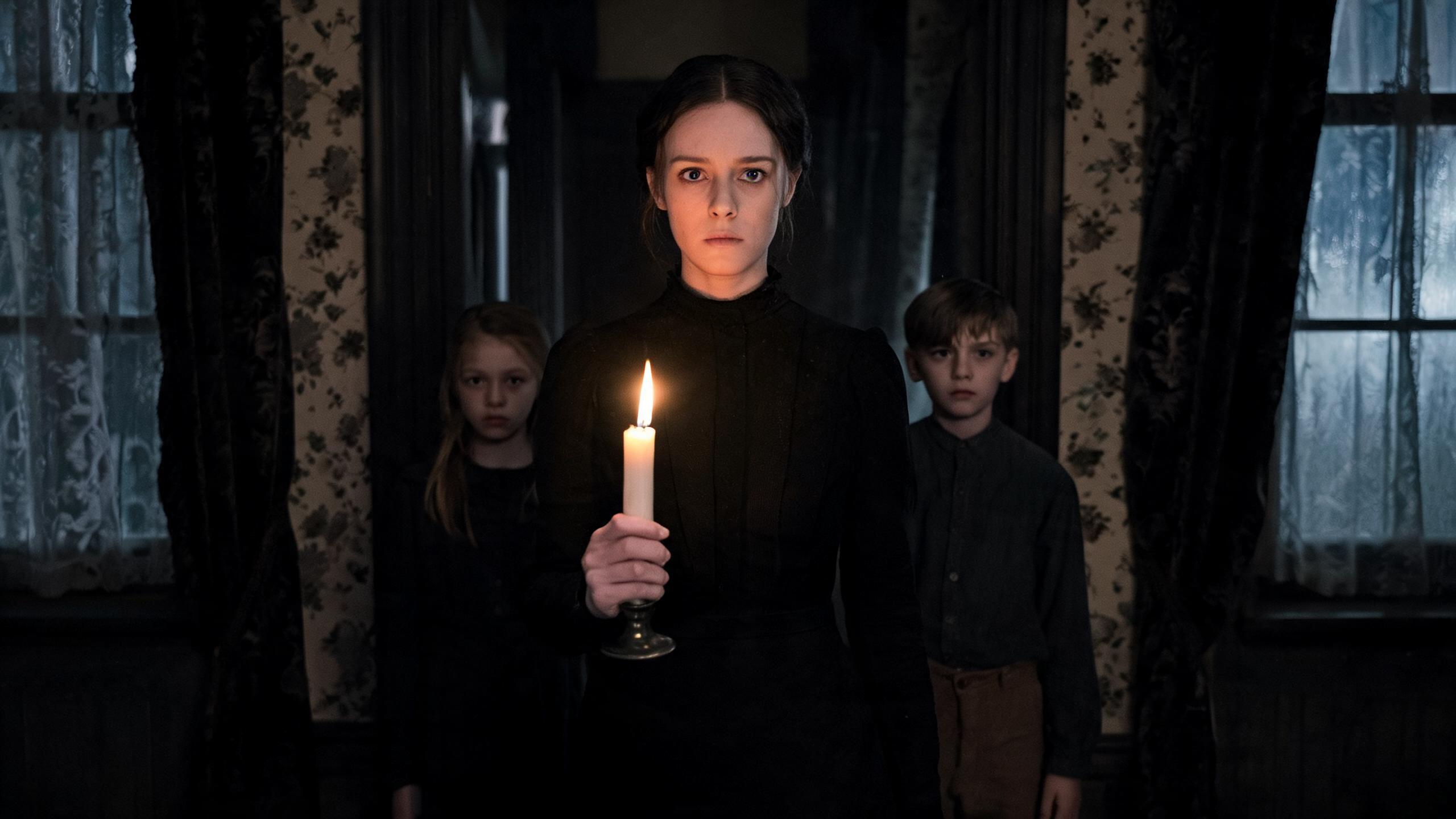
When The Others opened in 2001 it arrived as a tightly wound gothic ghost story: a fogbound mansion, three light-avoiding inhabitants and a mother who keeps the household under strict rules. Watching it now, the film feels less like a period piece and more like a parable for a different kind of haunting — the sense that whole societies can become occupied by the aftermath of conflict, living under the rules it imposes and unable to let go.
The house in The Others is the engine of its dread. Grace Stewart maintains a brittle control over every corner: shutters closed, curtains drawn, strict schedules and rituals that protect her children from harm. Those rules are not merely eccentricities; they are survival strategies for a family living under threat. That dynamic is what transforms the film from a domestic thriller into something broader. The paranoia and self-imposed austerity on display mirror how communities and nations respond to long, uncertain danger — trading light for shelter, spontaneity for caution.
At the emotional centre is Grace, played with quiet, unyielding intensity. Her worry for the two children and her insistence on order structure the film’s moral landscape. The film also gives weight to characters who arrive to destabilise that order: visitors, servants and the unexplained sounds that puncture the household’s rituals. Those intrusions force Grace and her household to ask who the real threat is and whether the fear that runs the house is protecting them or imprisoning them.
Grace Stewart, Anne, Nicholas, Mrs. Mills, Charles.
That short list of names — the mother, the two children, the household’s caretaker and the absent husband — maps the human cost the story studies. The film avoids spectacle; instead it focuses on internal fractures, how grief and suspicion eat away at care and companionship. The narrative steadily reveals that the haunting is not simply of place but of memory and unwillingness to accept change. The characters are haunted by losses they cannot reconcile, and the house becomes a stage where past and present, living and dead, vie for possession.
Technically, The Others uses shadow and sound with a discipline that supports its ideas. The camera lingers on empty rooms and faces, while the soundtrack trades overt jump scares for a persistent sense of wrongness. The absence of modern light, the reliance on candles and the way sunlight itself is framed as forbidden create a long, slow claustrophobia. Those formal choices help the film stand as a study in how fear restructures everyday life: ordinary rituals are recast as measures taken against an ambiguous threat.
Reading the film as a commentary on the era that followed its release gives it a nearly prescient feel. The early 2000s marked a shift in how people in many parts of the world lived with threat — heightened security, suspicions about who belonged where, and a sense that danger could be diffuse and never fully resolved. The Others does not name enemies or political causes; instead, it shows the more human consequences of living with indefinite danger: relationships strained by suspicion, children raised in fear, homes converted into fortresses against invisible forces.
That emphasis on personal cost makes the film useful for thinking about how societies carry the aftershocks of conflict. Amenábar’s moral question — who counts as the living and who as intruders — asks viewers to consider the boundaries between victim and aggressor, between those who cling to order and those who challenge it. The story resists neat moralizing. The truth it arrives at is quieter and more unsettling: hauntings are often produced by loss and the refusal to accept endings.
As a piece of filmmaking, The Others remains effective because it trusts atmosphere over explanation. Its twist — which repositions the audience’s sympathies and asks viewers to reassess everything they have seen — is not a cheap shock but the culmination of a story about isolation and memory. The reveal reframes the household’s rules and rituals, showing them as both safeguards and symptoms. The film’s final quiet is less a resolution than an admission: that some houses, and some communities, will carry their histories with them and continue to be shaped by them long after the initial trauma has passed.
That is the film’s haunting contribution to any conversation about long-term conflict. It refuses grand political claims while allowing a more intimate truth to surface: living under prolonged threat changes how people relate to one another, how they tell their stories, and how they mark space. In this way, The Others can be read as an early cultural portrait of living with a kind of slow, pervasive warfare — not necessarily fought with armies, but with rules, suspicion and the hard work of surviving loss.
The film does not offer policy prescriptions, nor does it insist on assignable blame. Instead, it offers a human study of what it feels like to be haunted, and why some hauntings last long after the original cause has been forgotten. That remaining unsettledness is precisely what keeps The Others feeling urgent: a reminder that sometimes the scariest thing is not a single violent act, but the quiet structures it leaves behind.




0 Comments