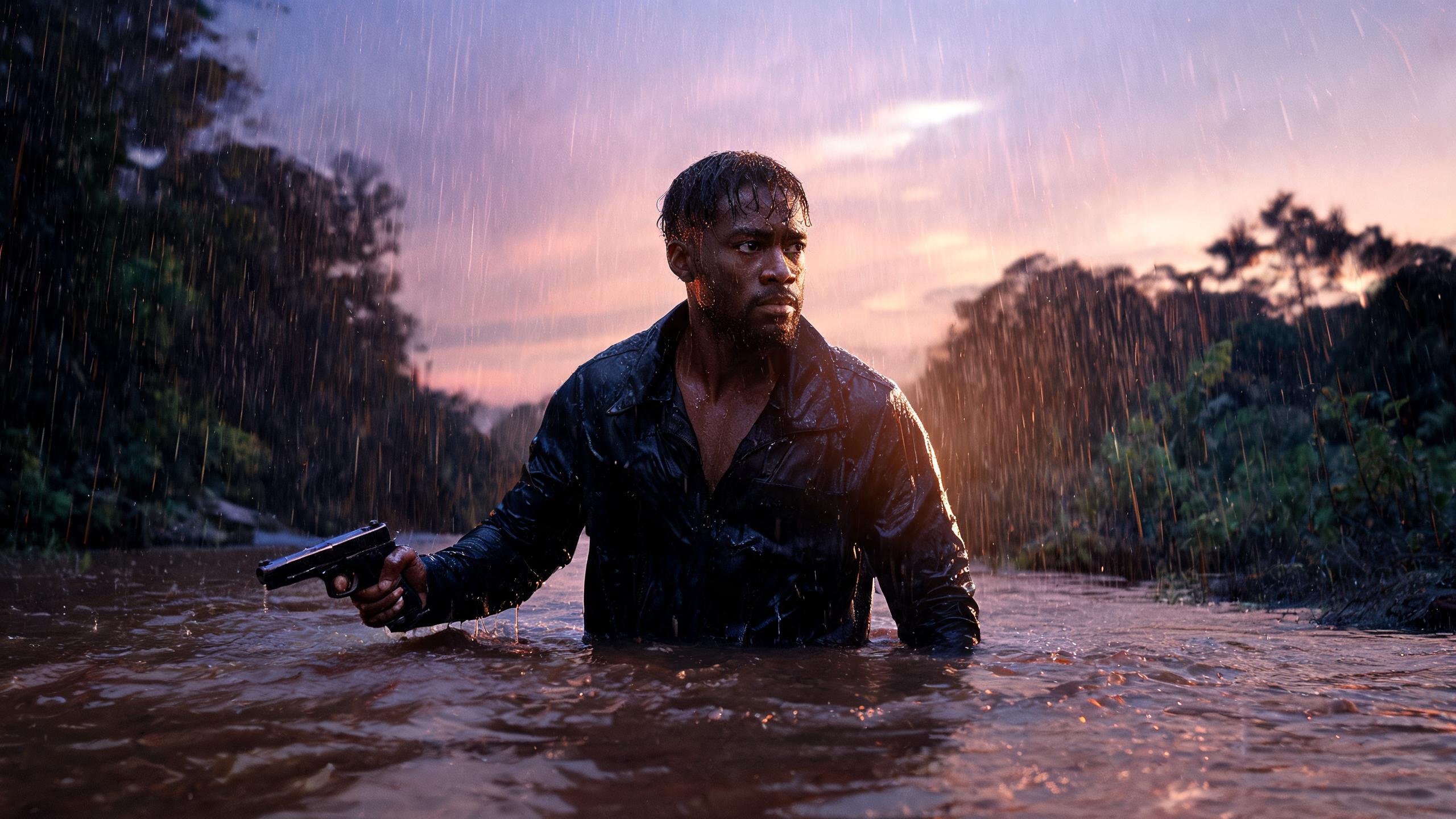
The Creek arrives as a kinetic entry in the action genre that shows off the craft of filmmaking in striking ways while leaving the story world underdeveloped. The film centers on Chike, a former river guide trying to protect his community, and Ada, a resourceful local teacher. Their fight against illicit traders led by Chief Okoro and the tense investigative presence of Inspector Danjuma provides the framework for a series of confrontations that prioritise set pieces over storytelling.
From the opening scenes the filmmakers signal that this will be an action-first experience. The choreography of the creek confrontations, the close quarters boat sequences and a night raid played out on slippery banks are staged with a clarity that makes each beat easy to follow. The director of photography favors wide compositions that capture the landscape as an active participant in the drama. Camera movement is confident and often daring, taking the viewer into cramped interiors and across rain-slick embankments. These choices enhance the visceral feel of the action and give the film a physical immediacy that will satisfy viewers who seek visual spectacle.
Technical departments are the film's clearest strengths. The sound design mixes environmental textures with the impact of gunshots and hand-to-hand combat so that moments of silence feel tense and every slap or splash matters. Editing is sharp in set pieces, with rhythmic cuts that heighten momentum and maintain spatial coherence. Costume and production design lend authenticity to the river community, and practical stunts are used more often than CGI. The production team earns repeated credit for creating an immersive atmosphere where the creek itself seems like an antagonist.
Performances are anchored by Chike and Ada, whose relationship provides the emotional core. Chike is portrayed as stubborn and haunted by past choices. Ada balances resolve with compassion as she negotiates community obligations and personal risk. Inspector Danjuma is methodical and provides a procedural counterpoint to Chike's more direct approach. The antagonistic Chief Okoro is forceful when present but his motivations are only partially revealed. Across the cast there are committed moments, but at times actors are asked to carry scenes that the screenplay has not fully supported.
The primary shortcoming of The Creek is its script. The plot often feels episodic, with action sequences stacked on top of one another without a through line that deepens stakes or clarifies character trajectories. Key plot turns are telegraphed early or introduced without sufficient build up. As a result, emotional payoffs are muted because the audience has not been given enough time to understand why certain confrontations matter. Subplots involving community politics and personal histories are sketched rather than explored, which reduces the film's thematic resonance.
Pacing is uneven. The middle act stalls under explanatory passages and repeated scenes that slow the narrative momentum established at the outset. When the film returns to action it regains energy, but these surges feel like punctuations rather than part of a steady escalation. The screenplay also relies on expository dialogue to move events forward, a tactic that undermines the visual storytelling its technical teams execute so well.
Another limiting factor is character development. Aside from Chike and Ada, many supporting figures are defined by a single trait and do not shift in convincing ways. Chief Okoro functions largely as an obstacle, and Inspector Danjuma remains professional but distant, which reduces the opportunity for a compelling moral or ideological clash. The film hints at larger social issues that affect the creek community but does not follow through on those threads in a sustained way.
Visually and technically The Creek demonstrates a confident command of form. Emotionally and narratively it often falls short of the same standard. Viewers attracted to tightly staged action, strong production values and a palpable sense of place will find much to admire. Those seeking a deeply layered plot or nuanced character arcs may leave wanting more.
In the end The Creek is a reminder of how different elements of filmmaking interact. Technical craftsmanship can elevate raw material and create memorable sequences that remain with the viewer. However technical skill alone cannot fully substitute for a script that builds tension, grows characters and clarifies motivation. The Creek is recommended for audiences who prioritize atmosphere and action choreography. For future projects, the creative team might aim to match their evident technical ambitions with a script that gives those visuals greater narrative purpose.







0 Comments