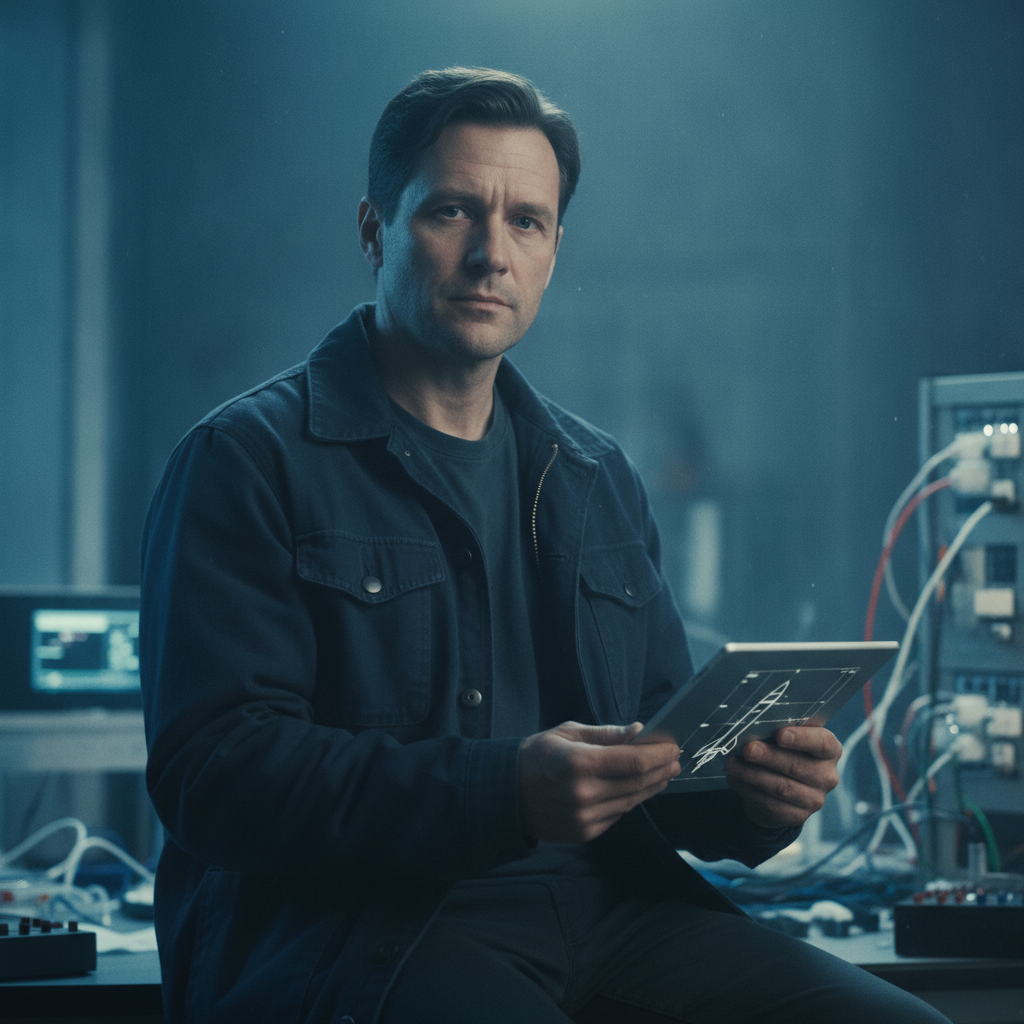
Hard science fiction rewards viewers who want plausibility, technical detail, and ideas that feel like thought experiments rather than spectacle. Since 2000, filmmakers have approached those demands in very different ways—from shoestring indie puzzles to mid-budget survival dramas. The following six films represent a range of approaches to hard‑sci‑fi: measured, idea-first, and rooted in recognizable science.
Primer (2004) is the archetypal DIY hard‑sci‑fi: a tiny-budget film that treats time travel like an engineering problem. The movie leans into dense, technical dialogue and tight internal rules, asking viewers to track causal loops and the consequences of tinkering with causality rather than offering easy answers.
Moon (2009) uses a spare setting—a lunar mining station—to explore the human and technical dimensions of long-term automation. The film focuses on plausible hardware, workplace systems, and the emotional effects of isolation, presenting a near-future that feels built from manageable extrapolations rather than flashy invention.
The Martian (2015) makes science the central language of survival. Its narrative is structured around practical problem solving, improvisation, and engineering trade-offs as an astronaut works to stay alive on Mars. The film foregrounds calculations, incremental fixes, and the ways collaboration and methodical reasoning matter in extreme environments.
Ex Machina (2014) approaches artificial intelligence with an emphasis on testable claims and ethical tangles. Instead of spectacle, it stages intimate encounters meant to probe consciousness, replication, and the limits of machine intelligence in settings that feel like plausible near‑future labs and prototypes.
Coherence (2013) turns a dinner-party setting into a tight exploration of quantum-like anomalies. Its low-budget execution is compensated by a strict adherence to in-universe logic: once the strange conditions are set, the film follows consequences with internal consistency, rewarding close attention.
Arrival (2016) emphasizes linguistic and cognitive science in a first-contact story. Rather than relying on action set pieces, the film frames contact as a research problem—deciphering structure, avoiding assumptions, and showing how new ways of thinking can reshape human perception.
Taken together, these films show how hard‑sci‑fi can be intimate, suspenseful, and intellectually rigorous without always leaning on spectacle. They prioritize problem-solving, consistent rules, and consequences that feel earned—a good starting point for anyone looking for science-driven storytelling on screen.


0 Comments