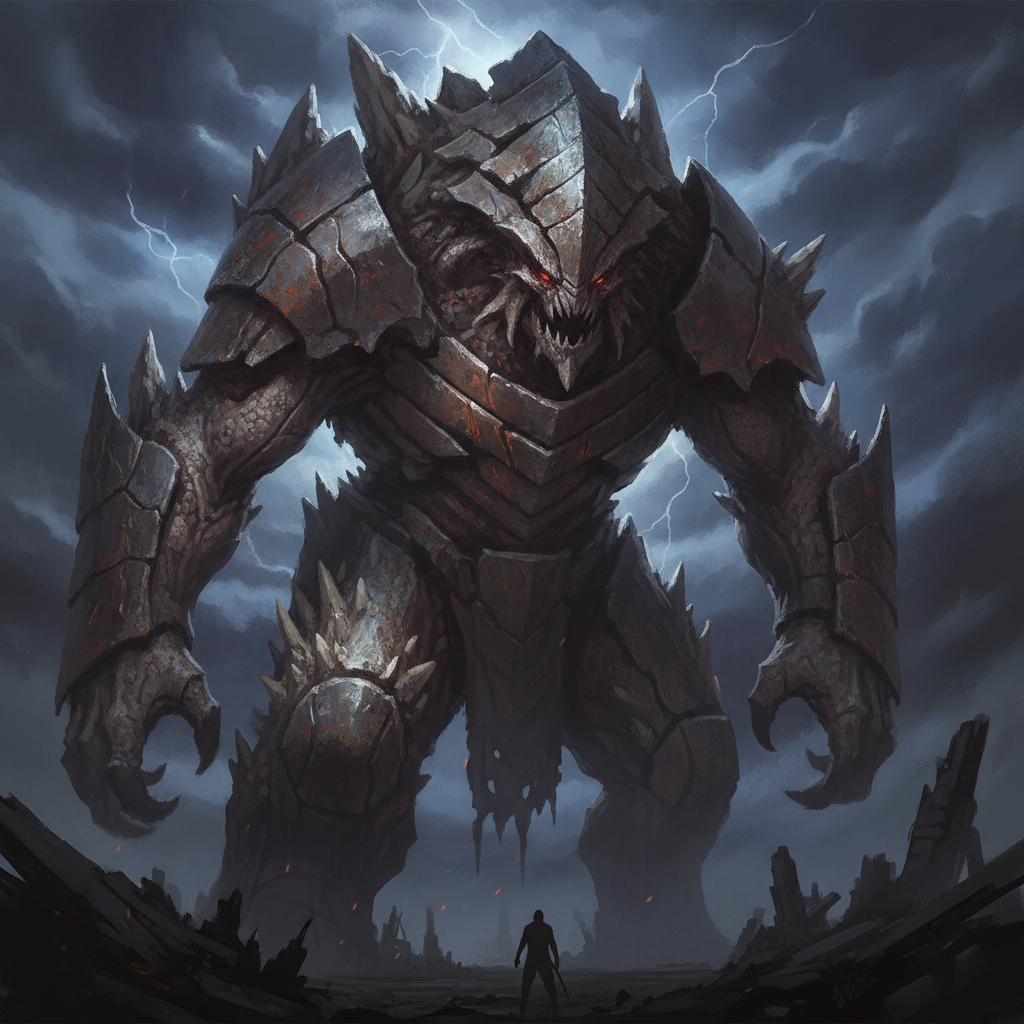
The art direction behind blockbuster projects often lives in sketches, thumbnails and concept paintings long before it reaches the screen. Recently, the art director for Avengers: Doomsday unveiled a new character illustration — calling the design “A Beast To Paint” — that offers a rare look at the early creative work shaping the film’s visual identity.
The released illustration emphasizes sheer scale and tactile detail: a hulking silhouette with layered surfaces that read as a mix of organic muscle and mechanical plating. What immediately stands out is the focus on texture — rough, pitted skin, scored armor plates and areas that catch light differently depending on angle. Those choices suggest the team is thinking not just about how the character looks in a single frame, but how it will read under different lighting setups and during dynamic action sequences.
From a workflow perspective, this kind of concept art functions as both inspiration and specification. The art director’s comment about the piece being “a beast to paint” points to technical and creative challenges: establishing believable anatomy for a large form, defining materials that will hold up in close-ups, and creating a palette that supports compositing with visual effects. Concept paintings like this help modelers, texture artists and animators understand intent early, reducing guesswork and preserving the original design’s emotional impact.
Fans and creatives often gravitate to these behind-the-scenes reveals because they expose the problem-solving behind spectacle. Instead of a final, polished hero image, this illustration reads like a working document — rich with notes about silhouette, weight, and the play of highlights and shadow. That iterative approach is especially important for characters intended to interact physically with live-action elements or to convey scale beside human actors.
The illustration adds momentum to anticipation for the film by foregrounding craft as much as character. It’s a reminder that even the most fantastical designs begin as thoughtful studies in form, light and texture, and that those early artistic decisions shape what audiences will eventually see on screen.
On balance, the reveal succeeds as both a visual tease and a practical blueprint. It underscores how much labor and creative problem-solving goes into bringing a single character from paper to spectacle, and it leaves viewers eager to see how this imposing concept will translate to the finished film.



0 Comments