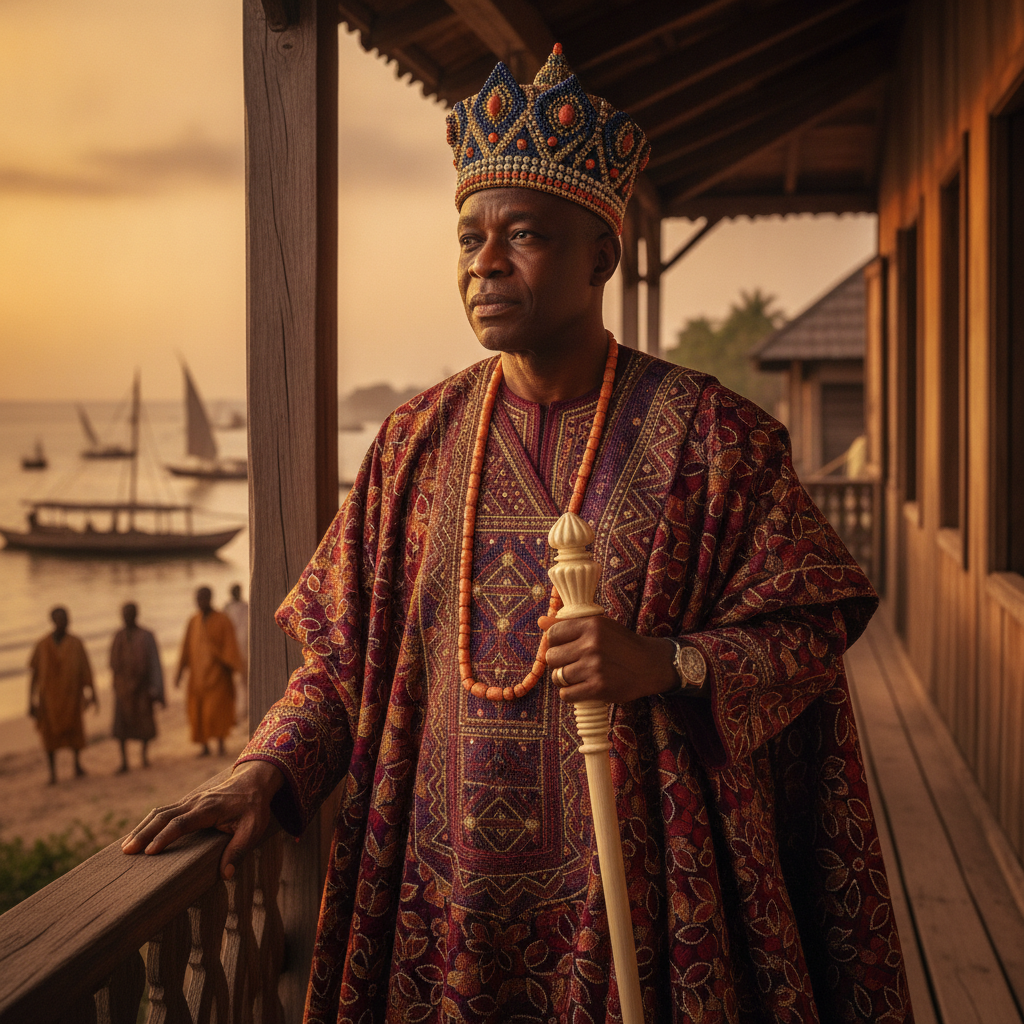
From the first scene, Eleko — Oba Esugbayi announces itself as a film that aims to do more than entertain: it reaches for the textures of Lagos' past and the emotional toll of leadership in a changing world. The movie leans into drama, staging confrontations and intimate moments with equal care so that history feels lived-in rather than merely recited.
Visually the film is committed to period detail. Costumes, sets and props create a convincing sense of place, and production design often steals moments with small, quiet tableaux that suggest everyday life in a city at a crossroads. Cinematography favors warm, amber tones and measured framing, giving the narrative a steady, almost theatrical rhythm. This visual approach helps the audience feel the weight of tradition alongside the pressure of external forces closing in.
At the center is the portrayal of the Oba, whose quiet authority and private doubts drive much of the film's emotional core. Performances throughout are deliberate and expressive: ensemble scenes hum with tension, while quieter exchanges reveal character history and social currents without heavy exposition. The film balances pageantry with personal cost, showing how ceremonies and obligations shape the choices of leaders and communities.
Narrative pacing leans toward the contemplative rather than brisk. Some viewers may find stretches where plot momentum eases in favor of character-focused sequences, but those moments are where the film earns its empathy. Sound design and a restrained musical score enhance mood without overwhelming dialogue, and the editing preserves the sense of an unfolding chapter in a broader social story.
Eleko — Oba Esugbayi is not a documentary; it’s a dramatized portrait that uses historical setting as a frame for human conflict. For audiences interested in Nigerian cinema and historical drama, the film offers a thoughtful, textured experience that privileges atmosphere and character over fast-moving plot.
In sum, this is a film that invites viewers to linger. It may demand patience, but rewards it with richly staged scenes and a respectful, emotionally grounded look at Lagos' layered past.



0 Comments