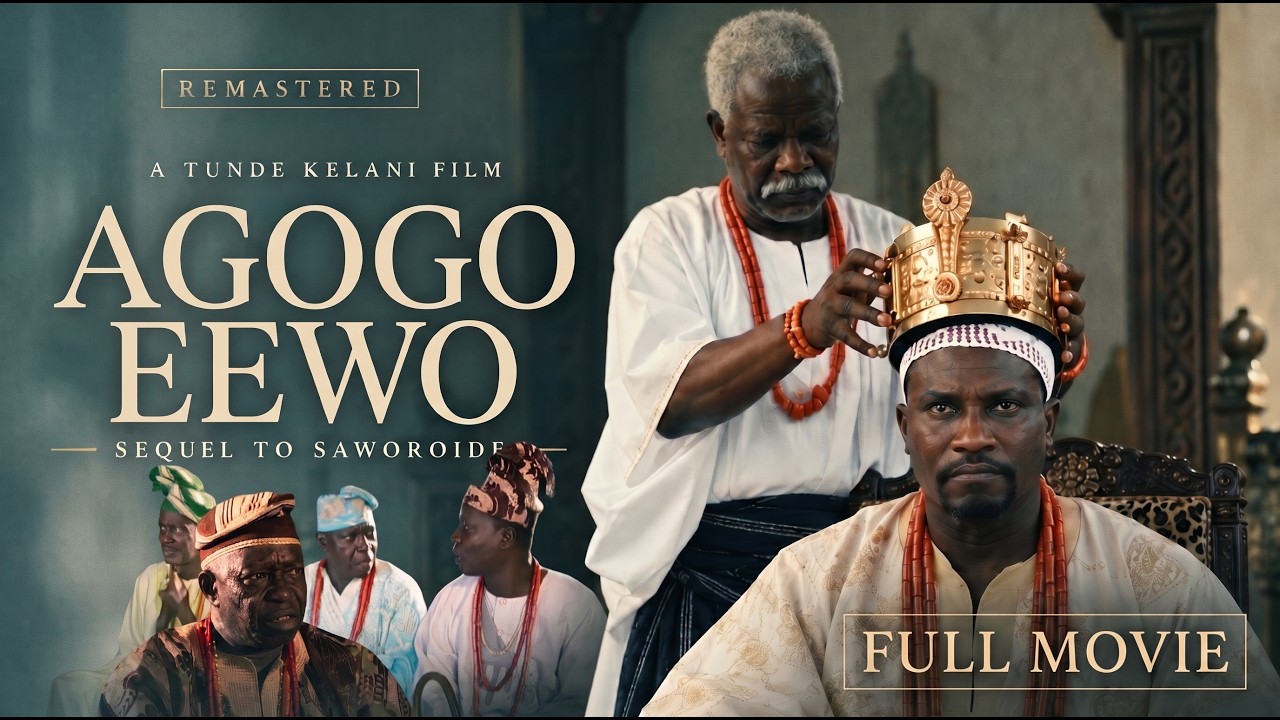
Some films do not age. They simply wait for the country to catch up. On November 1, 2026, Nigerian filmmaker Tunde Kelani reintroduced Agogo Èèwò in a newly remastered presentation on his TK Òpómúléró YouTube channel, a quiet return ticket to Jogbo, the allegorical Yoruba polity first seared into national memory by Saworoide. The upload restores the texture of a classic while reopening an argument about power, ritual and responsibility that refuses to fade.
Agogo Èèwò was first released in 2002 and written by the late Professor Akinwunmi Isola. The story resumes after the fall of the soldier‑ruler Lagata. Jogbo’s chiefs, intoxicated by access to the treasury, enthrone Adebosipo, played by the late Dejumo Lewis, expecting a pliant monarch because he is a retired policeman. He resists. What follows is a clash between a king determined to defend the commons and a cabal determined to keep the taps open, culminating in a public rite before the sacred Gong of Taboo where thieves must confess before the gong strikes seven times. It is an evergreen study of corruption, leadership and traditional systems of accountability, newly sharpened by the remaster.

The remaster also underscores how Nigerian classics are finding new life on accessible platforms. “Over 540 joined us live last night,” Tunde Kelani wrote on X the morning after the premiere, thanking a global audience and directing latecomers to the full cut on TK Òpómúléró. The numbers are modest by blockbuster standards, yet the intimacy of a communal watch, comments and all, is part of the allure. It is cinema returning to the town square, only this time the square is digital.
There is another subplot here, one about guardianship of cultural memory. Earlier this year, Kelani publicly cautioned against ripping films into bite‑size clips for quick views, calling such tactics injurious to creators. “This is piracy and the destruction of our cultural work,” he warned in February, urging audiences to support legitimate channels. The remastered Agogo Èèwò, free to stream yet controlled at source, feels like the filmmaker’s reply in practice. It invites discovery without surrendering authorship.
For a generation steeped in crisis and irony, Jogbo’s test remains fresh: who will answer to the people when the gong sounds. With this careful restoration, Kelani is not merely revisiting a cherished film. He is tending an archive and rearming a civic parable, trusting that the old bell still knows how to ring.









0 Comments