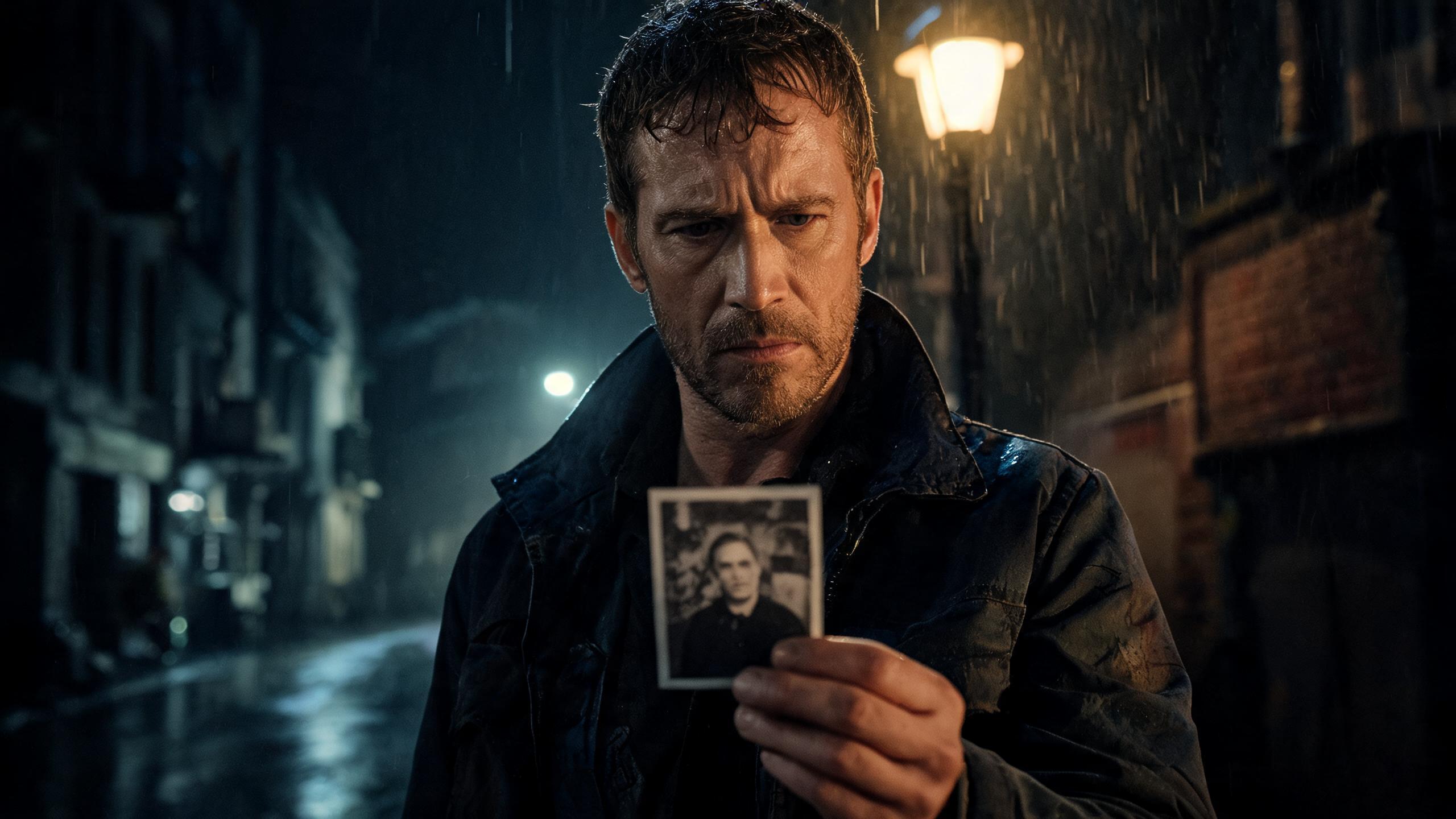
Zack Snyder returned to the film festival circuit with The Last Photograph, a compact action drama that premiered at the Toronto Film Festival. The film replaces the director’s trademark comic book excess with a stripped back, often brutal story that leans on character and consequence. Stuart Martin leads the cast with a close, affecting performance that keeps the narrative grounded even when the violence intensifies.
The Last Photograph is built around a simple premise and a tight running time. It follows a man drawn into a violent spiral after a traumatic loss, with photography serving as a recurring motif that links memory to motive. The scenario allows Snyder to focus on mood and pressure rather than spectacle. Cinematography favors close framing and natural light, creating intimacy. Action sequences are physical and immediate. They are not designed as set pieces for spectacle but as moments that reveal character under strain.
Stuart Martin is the film’s emotional anchor. His portrayal is measured and often restrained. Rather than telegraphing anguish with bombast, Martin shows a person operating on instinct and dwindling hope. His small gestures and the way he handles the titular photographs give the story its human center. Supporting performances are subdued by design, which keeps the spotlight on the lead and the ethical choices he faces. The ensemble plays a functional role in the story, representing the forces that push or pull the protagonist toward confrontation.
Snyder’s approach here will surprise viewers familiar with his previous work. Where earlier films used highly stylized visuals and operatic rhythms, The Last Photograph trades grandiosity for economy. The director still exhibits a clear command of rhythm and composition. He uses long takes and deliberate camera moves to escalate tension slowly. When violence occurs it lands hard because it contrasts with the film’s otherwise restrained pace. Practical effects and close combat keep sequences visceral and immediate. Sound design is pared back to amplify the impact of sudden bursts of noise.
The film’s theme sits at the intersection of grief and accountability. Snyder avoids easy moralizing. Instead the story allows viewers to experience the protagonist’s confusion and determination. The screenplay does not always tie every narrative thread into a neat resolution, but this ambiguity is consistent with the film’s investment in human unpredictability. The photography motif recurs as a way to interrogate memory and to question what remains when images are all that survive.
Festival reaction was attentive and varied. Some viewers praised the film’s tonal shift and Martin’s performance. Others saw moments where pacing could have been tightened. The movie will likely find an audience among viewers who appreciate action rooted in character and filmmakers willing to reposition their style.
The Last Photograph marks a notable turn for Snyder. It is an intense, often unsettling film that privileges human detail over spectacle. For audiences expecting a return to large scale effects, it will feel different. For those open to a director exploring quieter, darker territory, the film offers a tough but emotionally coherent experience. Snyder and Stuart Martin deliver a collaboration that stays with you after the credits roll.








0 Comments