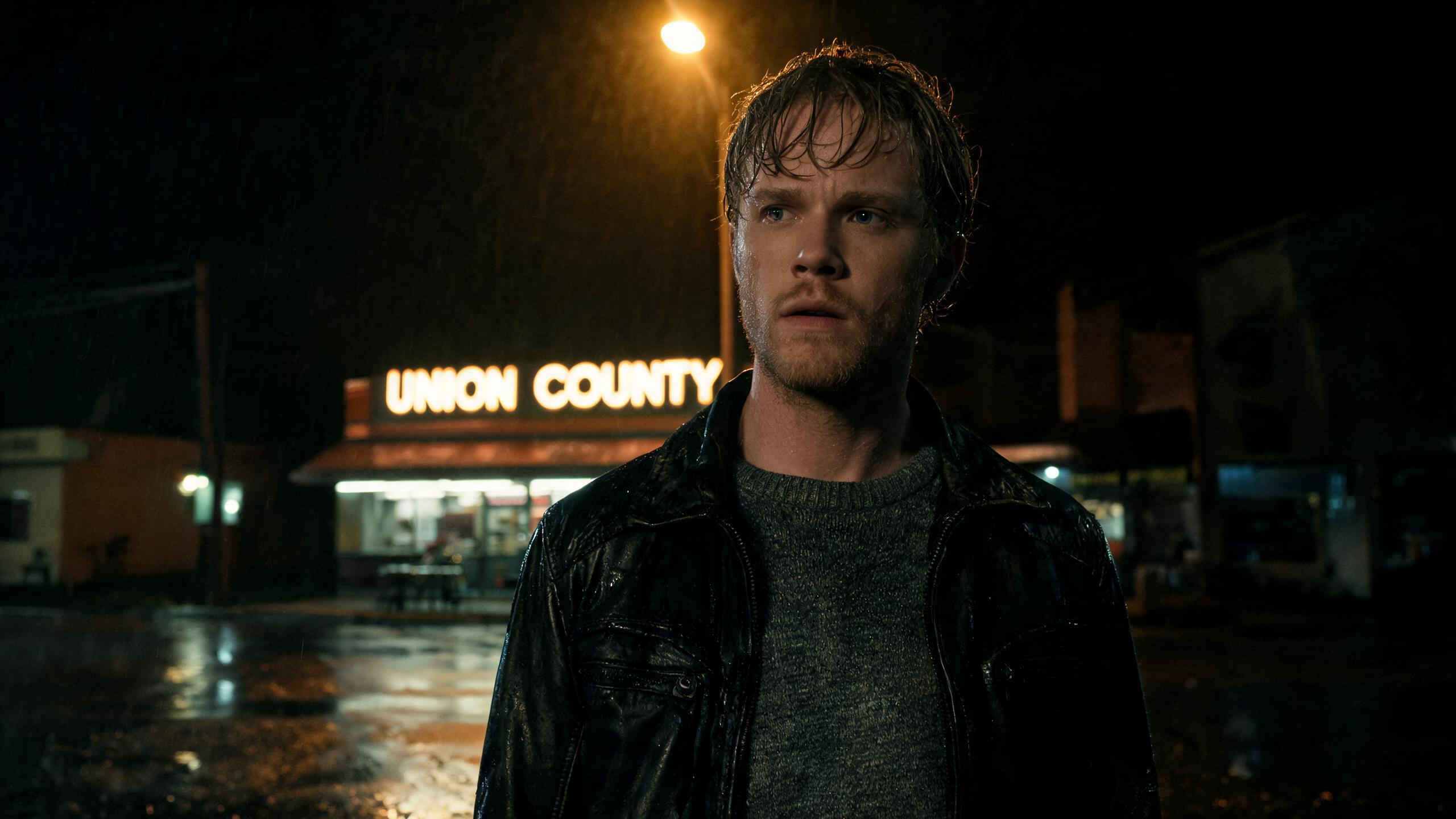
An exclusive clip from the upcoming film Union County arrives with an added layer of context: actor Will Poulter steps into frame not only as the character but as a guided narrator of a key sequence. The short scene, and Poulter's commentary around it, sheds light on the tone the filmmakers are aiming for and the emotional terrain at the centre of the story.
Poulter plays Daniel Mercer, a man whose return to his childhood town, Union County, reopens old wounds. The clip focuses on a late-night encounter outside a shuttered diner, where Daniel meets Ava Reyes, a local who has ties to his past. The scene is compact and quietly charged. Rain slicks the street, a single streetlight casts long shadows, and the camera lingers on small details: a cigarette stub, a tremor in Daniel's hand, a faded high school emblem on a locker door glimpsed through a diner window.
Guiding viewers through these choices, Poulter explains why the scene holds weight for his character. He points out how the weather and muted color palette mirror Daniel's internal state and how the decision to keep many moments wordless lets physical acting carry the story. Poulter highlights a moment when Daniel pauses before answering Ava, describing it as a hinge that reveals more about Daniel than any line of dialogue could. The actor's reading frames the clip as a study in restraint: the film prefers implication over exposition.
Beyond the emotional beats, Poulter takes viewers into technical territory. He discusses blocking and why the director chose to keep the camera at a patient, medium distance for much of the encounter. According to Poulter's breakdown, this framing creates a sense of shared space between Daniel and Ava while preserving the feeling that the town itself is watching. The actor also calls attention to a deliberate sound design choice: distant, indistinct traffic and the hum of neon inside the diner. Those ambient noises, he says, were used to anchor the scene in a lived-in world and to avoid theatrical silence.
The clip also offers a first look at the film's supporting cast through the presence of a few background characters who react to the encounter. One of them, credited in the clip as Detective Barnes, appears briefly and provides a reminder of the story's broader stakes. His single line hints at legal trouble circling Daniel, though the moment is played for its immediate emotional effect rather than as an information dump.
Poulter's walk-through naturally draws attention to the film's central relationships. He describes Daniel and Ava as carrying complementary burdens. Ava is introduced as someone who has stayed and watched the town change, while Daniel is the outsider returned with secrets. Their exchange in the clip telescopes decades of connection into a handful of gestures and charged looks, and Poulter points out a single touch—a hand briefly resting on a shoulder—as the emotional fulcrum. The choice to underplay that gesture, he says, makes it more honest and therefore heavier.
Visually, Union County leans into a restrained, observational aesthetic. The clip favors long takes and steady camera moves that let the actors set the rhythm. Poulter highlights a particular shot where the frame slowly tightens on Daniel's face as he processes a line from Ava. The tightening mirrors the tightening of tension in the scene and prepares the viewer for the larger uncompromising mood the film appears to cultivate.
The short segment does not resolve the questions it raises. Instead it functions as an invitation: to watch how secrets surface and how a small community responds when old wrongs come to light. Poulter's commentary repeatedly returns to the idea that the film trusts audiences to assemble the emotional map for themselves. He frames the movie as one that rewards attention to detail rather than overt explanation.
For audiences, this exclusive clip and Poulter's accompanying narration offer a clear sense of the film's aims without spoiling any major plot turns. It reveals the craft behind the filmmaking choices and anchors the story in recognizable human moments: a hesitant apology, a refusal to meet someone's eyes, the way a place can feel both familiar and foreign when seen through the lens of return.
Union County remains a film to watch for viewers who favor mood-driven storytelling and character-driven mysteries. Poulter's candid walkthrough adds context and raises expectations for a feature that appears committed to nuance and slow-burn tension. Whether the rest of the film deepens the questions raised in this scene will be for the full runtime to decide, but the clip makes one thing clear: attention to small, believable moments is at the heart of what the filmmakers want to deliver.








0 Comments