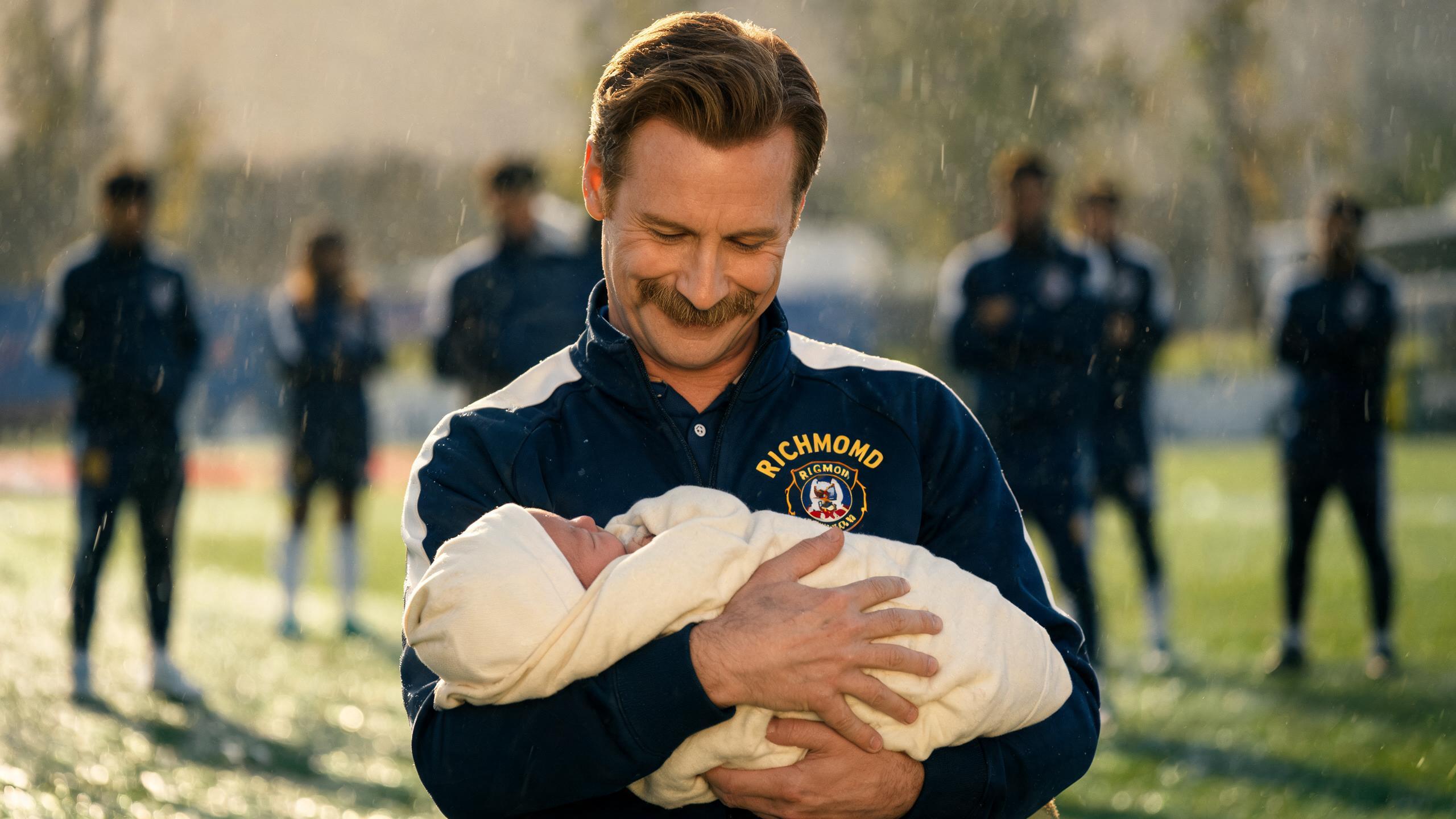
The seventh episode of Ted Lasso season four, titled "Yes And...Baby", marks a clear tonal shift for the series. After stretches of plot-driven turns and wide-ranging comic set pieces, this hour slows to examine the emotional architecture beneath the show. The result is a quieter, more intimate installment that emphasizes connection, repair, and the small rituals that keep a team and community intact.
Jason Sudeikis's Ted Lasso remains at the center, but his role here is less about big motivational speeches and more about the day-to-day practice of being present. The episode uses the improv principle "Yes and" as a motif; Ted applies it off the training ground as he leans into active listening and incremental kindness. Those moments are not flashy, yet they produce the episode's most honest beats, as characters practice giving and receiving support instead of performing for each other.
Rebecca Welton emerges as the emotional compass for this hour. Her storyline revolves around choices about family and identity and ties into the episode title through literal and metaphorical references to new life. Rebecca's scenes are handled with restraint, allowing the audience to watch her weigh public identity against private longings. The episode resists tidy resolutions, instead honoring the complexity of a woman who has rebuilt herself and now faces a different kind of decision.
Roy Kent and Keeley Jones continue to be an anchor pair, showing how partnership in this world is work as much as it is affection. Roy's gruff exterior is paired with small, unguarded gestures that reveal his evolving capacity for tenderness. Keeley is portrayed as both pragmatic and fiercely supportive, and their interactions suggest a mature rhythm after past turbulence. These quieter domestic moments carry as much weight as the series' sportier scenes.
Nate's path in this episode leans toward reconciliation. Rather than a grand redemption arc, the narrative gives him incremental opportunities to apologize and to rebuild trust in team contexts. Higgins functions as the connective tissue in the clubhouse, smoothing interpersonal friction and reminding everyone that community is an active, ongoing commitment.
On the pitch, the episode keeps game time lean and purposeful. The coaching beats are less about tactics and more about human relations: who listens, who owns mistakes, who steps back so someone else can shine. The show finds humor in small failures and tenderness in the aftermath, which is a reminder that the heart of the series has always lived in those aftergame conversations.
Cinematically, the episode favors warm, unforced compositions. Close-ups on faces during quiet exchanges and steady camera work during walk-and-talks create a domestic feel rather than a broadcast-sports energy. The score and sound design lean into silence at crucial moments, giving characters room to breathe and viewers space to feel.
Roundup opinion
"Yes And...Baby" is a patient episode that rebuts the notion that every turn must escalate the stakes. By narrowing its focus to relationships and the slow work of emotional repair, Ted Lasso season four reasserts what made the show resonate: its commitment to kindness without sentimentality. This installment does not erase the series' past conflicts. Instead it offers a clear, humane path forward, suggesting that real victories are quieter and often happen offscreen. For viewers craving warmth, honest conversation, and character growth, this episode delivers a welcome recalibration.











0 Comments