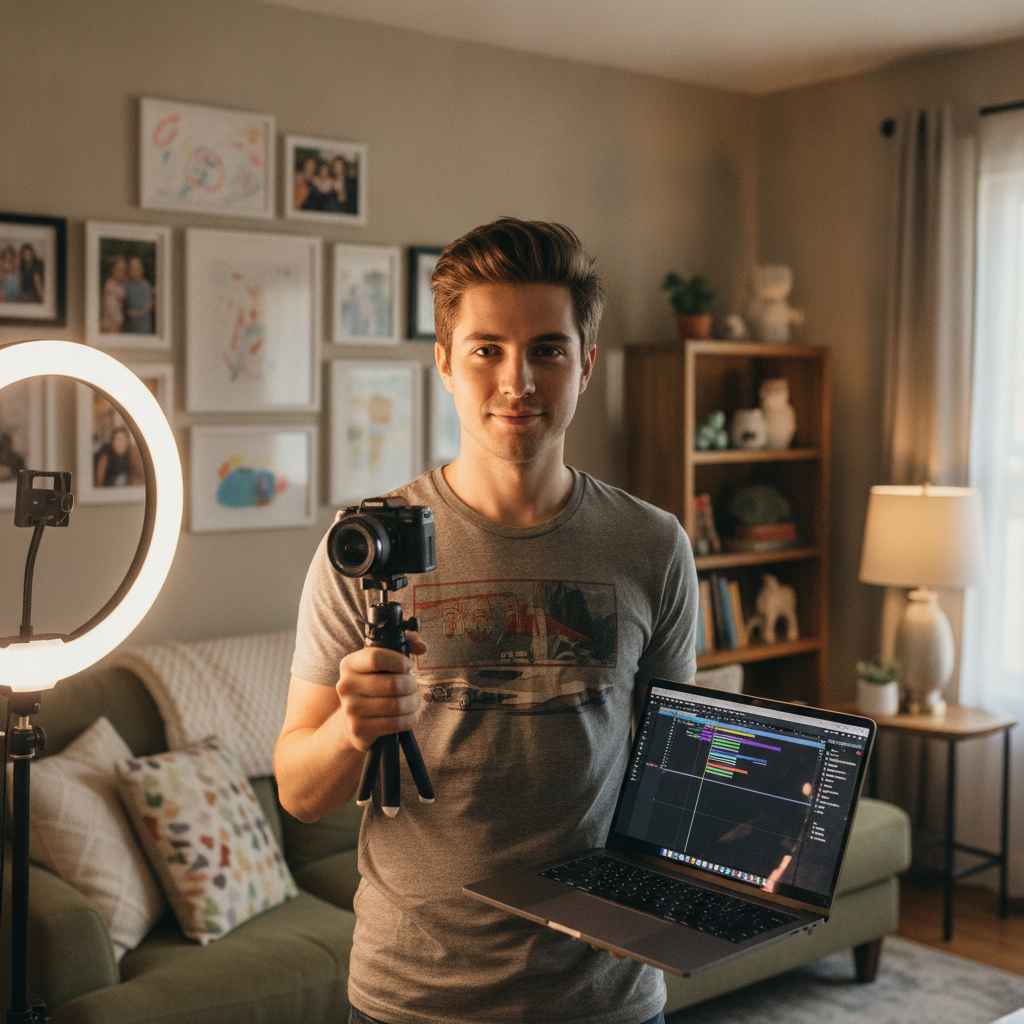
There’s a new kind of location scout: people from development departments showing up at a creator’s family living room to observe how content is made. In recent weeks, representatives from several production outfits have been visiting Kane Parsons’ mom’s house to watch the creator’s process firsthand — a sign of how traditional studios are trying to decode what makes modern online video work.
The appeal is simple. YouTube and other social platforms reward a blend of immediacy, personality, and format tricks that don’t always translate from big-budget production notes. Watching a creator in their home environment reveals the small decisions that add up: pacing and cut rhythms, how a host builds rapport with viewers, the framing and lighting choices that feel intimate rather than polished, and the editing shortcuts that make long-form ideas feel snackable.
Studios are not just learning technical hacks; they’re studying audience dynamics. A creator’s comment section, recurring community in-jokes, and the cadence of uploads are part of the product. By observing a creator’s ecosystem — from camera angles to thumbnails to the way they toss off lines that become memetic — development executives hope to understand how to preserve authenticity when scaling a concept to film, TV or streaming.
There are pragmatic benefits too. Low-budget, high-return content strategies can inform development pipelines. Learning to prototype ideas quickly, test them with audiences, and iterate based on real engagement metrics is a model studios want to import. Some teams also see opportunities to build talent partnerships that start with learning instead of immediately offering deals.
The risks are obvious: over-formulaic translation can strip away the qualities that made the original content resonate. Observing is different from replicating. The future that studios are trying to reach likely lies in collaboration — marrying narrative expertise and production scale with the creator’s instincts and direct relationship with their audience.
For now, the visits to a suburban living room are emblematic: the industry is no longer content to study clips and analytics alone. To understand YouTube in 2026, many think you have to sit in the kitchen and watch the creator make breakfast and a viral idea in the same ten minutes.
0 Comments