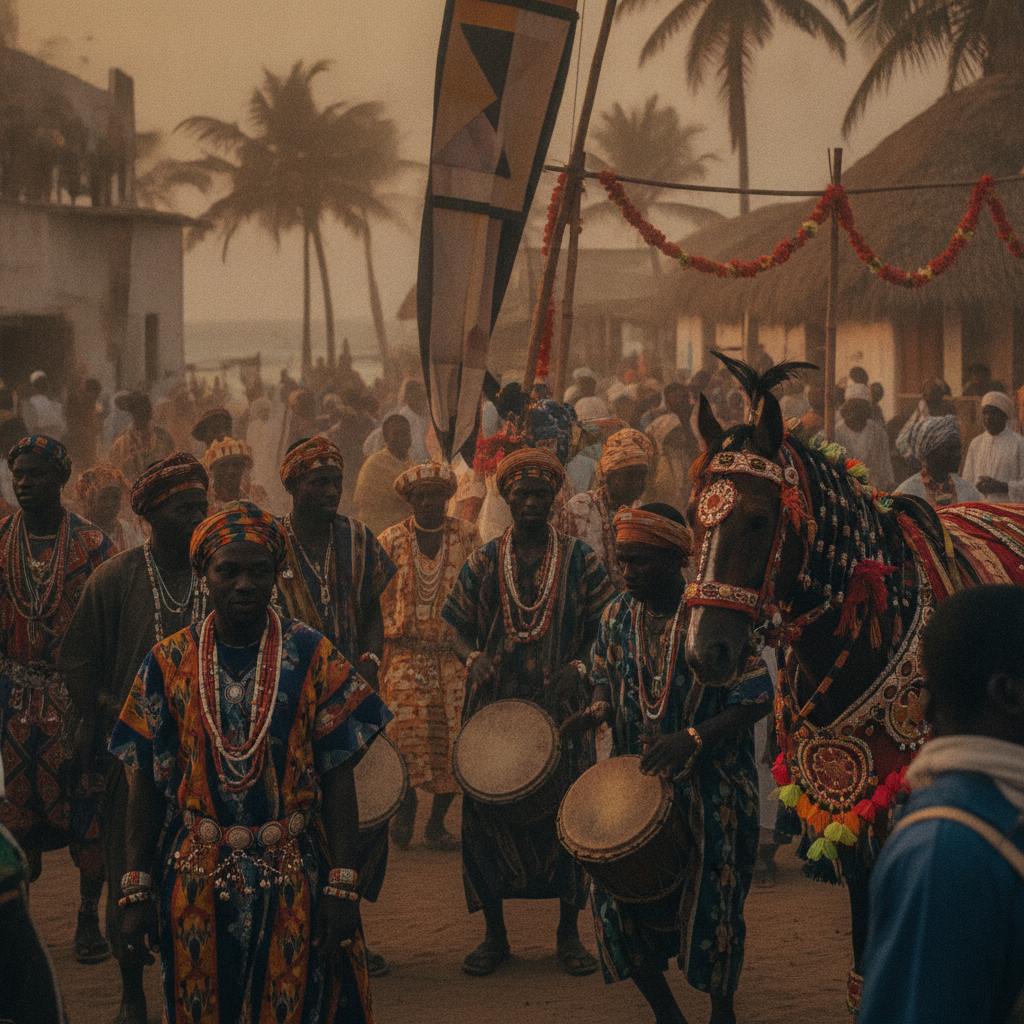
Iwe Ala arrives with an ambitious brief: translate the pulse and pageantry of a major Yoruba festival into cinematic language. The project highlights a familiar tension for filmmakers aiming to dramatize living traditions—how to remain faithful to ritual detail while shaping scenes that work for story, camera and modern audiences.
The production team wrestled first with atmosphere. Festivals are multisensory ecosystems—processions, drumming, choreography, richly patterned fabric and the hum of large crowds. Recreating that density on a controlled set meant assembling hundreds of extras, sourcing authentic regalia and working closely with craftspeople to replicate traditional garments and beadwork. Attention to material detail helped sell the world, but it did not eliminate the other problems that arise when translating communal performance into framed images.
Logistics and safety posed further constraints. Scenes that on-site unfold spontaneously become complex to stage: coordinating movement across wide plazas, integrating animals used in parade traditions, and timing musical cues to camera coverage all demanded meticulous planning. Filmmakers had to balance the tempo of the festival—its long arcs and pauses—with the tighter rhythms required for film scenes, sometimes compressing or reshaping events while trying to preserve their spirit.
Beyond practicalities, the team navigated questions of cultural stewardship. When a film depicts rituals and civic pageantry, it carries responsibility to the communities represented. The production engaged cultural custodians to avoid caricature and to ensure honorific elements were handled respectfully. That collaboration influenced costume choices, choreography and dialogue, and also shaped decisions about which parts of the festival to highlight or condense for narrative clarity.
The result is not a documentary record but a cinematic interpretation that aims to evoke rather than catalog. Viewers come away with a sense of scale, color and communal pride, while the adaptation invites discussion about how traditions can be translated for new audiences without losing their roots.
Iwe Ala’s attempt to recreate a complex festival on film is revealing: it shows how cinema can amplify cultural richness, but also reminds creators that authenticity requires humility, close consultation and technical care. For audiences, the film offers a vivid entrée into a storied celebration while leaving space to explore the real-life practices that inspired it.



0 Comments