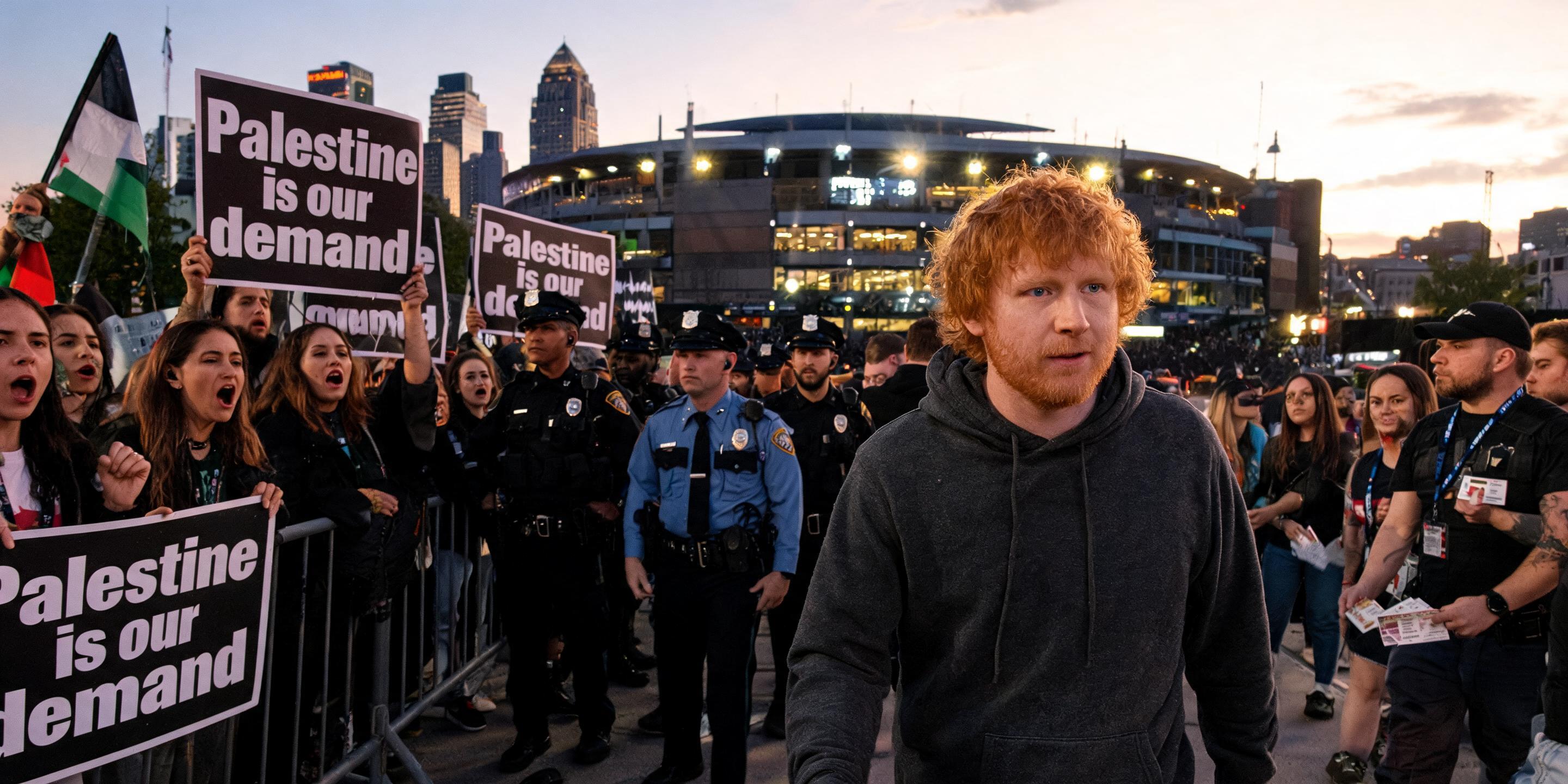
Pro-Palestine demonstrators confronted Ed Sheeran as he arrived for a scheduled concert in Philadelphia in September 2026. The group gathered near the venue entrance and directed loud chants and signs toward the singer and arriving fans. The demonstration briefly disrupted arrival but the concert went ahead as planned.
Witnesses described a tense scene outside the venue. Protesters held placards and chanted slogans that demanded attention to the Palestine cause. Several chants explicitly targeted the event and its audience, using strong language to underscore their message. Large numbers of fans streamed past the demonstration to enter the venue. Security staff and police were present and maintained separation between the demonstrators and the concert perimeter.
Ed Sheeran, who had been arriving with his touring entourage, did not publicly address the demonstrators at the site. Members of his team escorted him from arriving transport into the venue. After the brief confrontation outside, the performance proceeded on schedule. Audience members reported a full set from Sheeran with no onstage reference to the protest.
Organizers for the demonstration said their intent was to bring public attention to a political crisis and to leverage high-profile events for visibility. Organizers used social media to coordinate attendance and instructed participants to remain in the public area outside the venue. Local authorities monitored the demonstration and managed crowd flow to minimize interference with ticketed entry.
The event in Philadelphia is part of a wider pattern of demonstrations that have targeted entertainment venues and artists in recent months. Such actions have been met with diverse reactions from the public and artist communities. Promoters stressed the importance of public safety and the right of ticket holders to attend paid events without obstruction.
Roundup opinion
The incident highlights the collision of public protest and live entertainment. Demonstrators used the high-profile arrival of a touring artist to amplify their message while venue and security teams prioritized the flow of fans and safety. Regardless of viewpoints expressed, the situation underscores ongoing tensions around how public spaces and cultural events are used as platforms for political expression. For performers, venues and authorities, such moments raise practical questions about balancing the right to protest with the rights of event organizers and ticket holders.




0 Comments