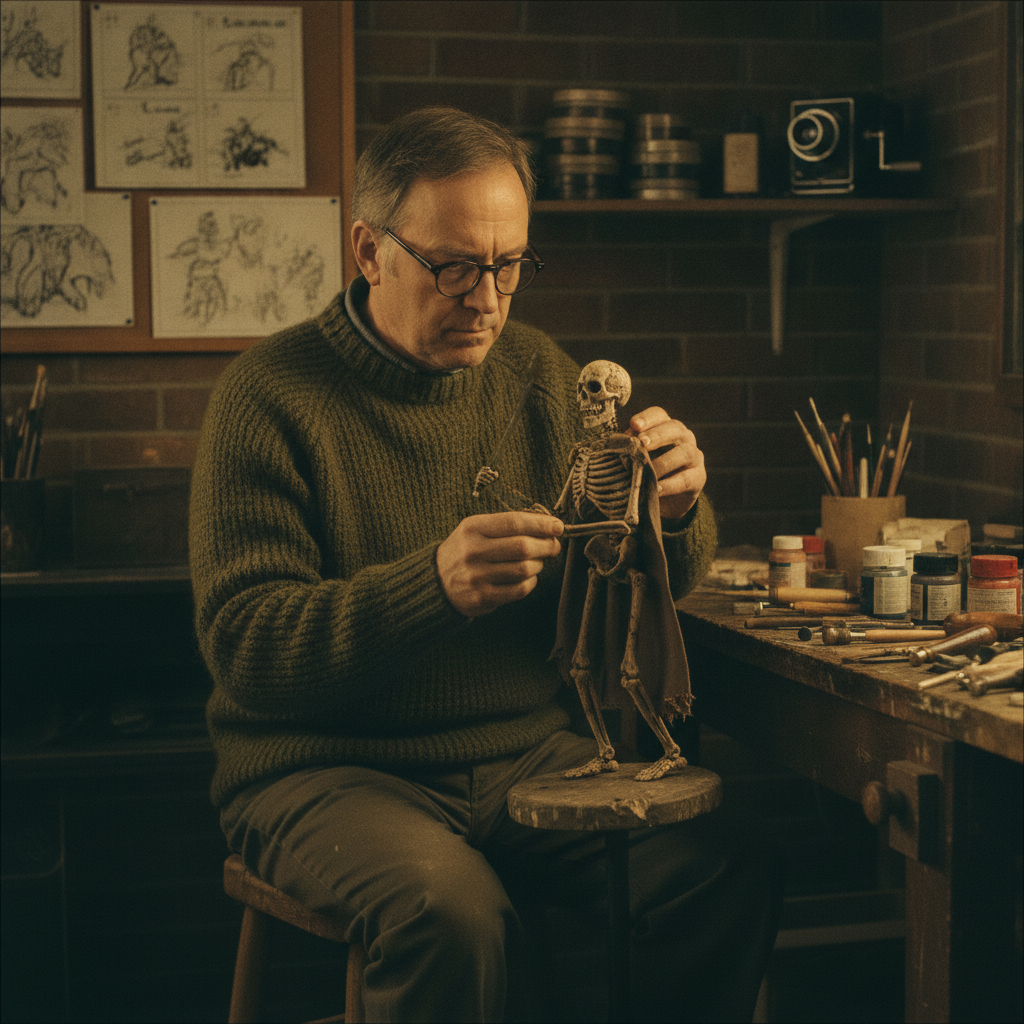
There’s a specific kind of awe that arrives when a handcrafted creature moves frame by frame and, for an instant, becomes real. That tactile, dreamlike quality is the hallmark of Ray Harryhausen’s stop‑motion work — a legacy of bones, scales, and wires that continues to ripple through contemporary filmmaking.
Harryhausen’s process was meticulous and almost ritualistic: sculpting armatures, building articulated skeletons, and animating each gesture to match the rhythm of live actors and sweeping scores. The result was more than visual trickery; it was storytelling through texture. Iconic moments — an animated skeleton fight, a colossal winged beast descending on a hero — owe their power to the tangible weight and choreographed timing that stop‑motion uniquely provides.
That tangible approach is one reason filmmakers working decades later still look back to Harryhausen. Modern directors who pursue a sense of grandeur and immediacy often borrow his priorities: physicality in effects, careful composition of spectacle, and a willingness to mix the mythical with the intimate. Practically staged effects can anchor high‑concept ideas, letting audience emotions connect to something visibly crafted rather than purely digital.
Beyond technique, Harryhausen’s work shaped how myth can be adapted for the screen. He treated legendary characters not as static icons but as actors with rhythm, flaws, and personality. This invitation to reanimate classical tales — to stage them as human dramas in fantastic guises — helped set a template for storytellers seeking to blend epic scale with grounded emotion.
The takeaway is simple: stop‑motion’s charm isn’t nostalgia alone. It’s a reminder that craft can amplify imagination. Whether through a single, perfectly animated gesture or an elaborate battle sequence, the physical craft of those original effects carries a lesson for any filmmaker building an odyssey on screen.
If you’re revisiting classic fantasy or exploring modern films that aim for mythic breadth, look for that handshake between practical detail and storytelling ambition. It’s where Harryhausen’s influence endures — in the way filmmakers choose to make their wonders feel earned and, ultimately, believable.


0 Comments