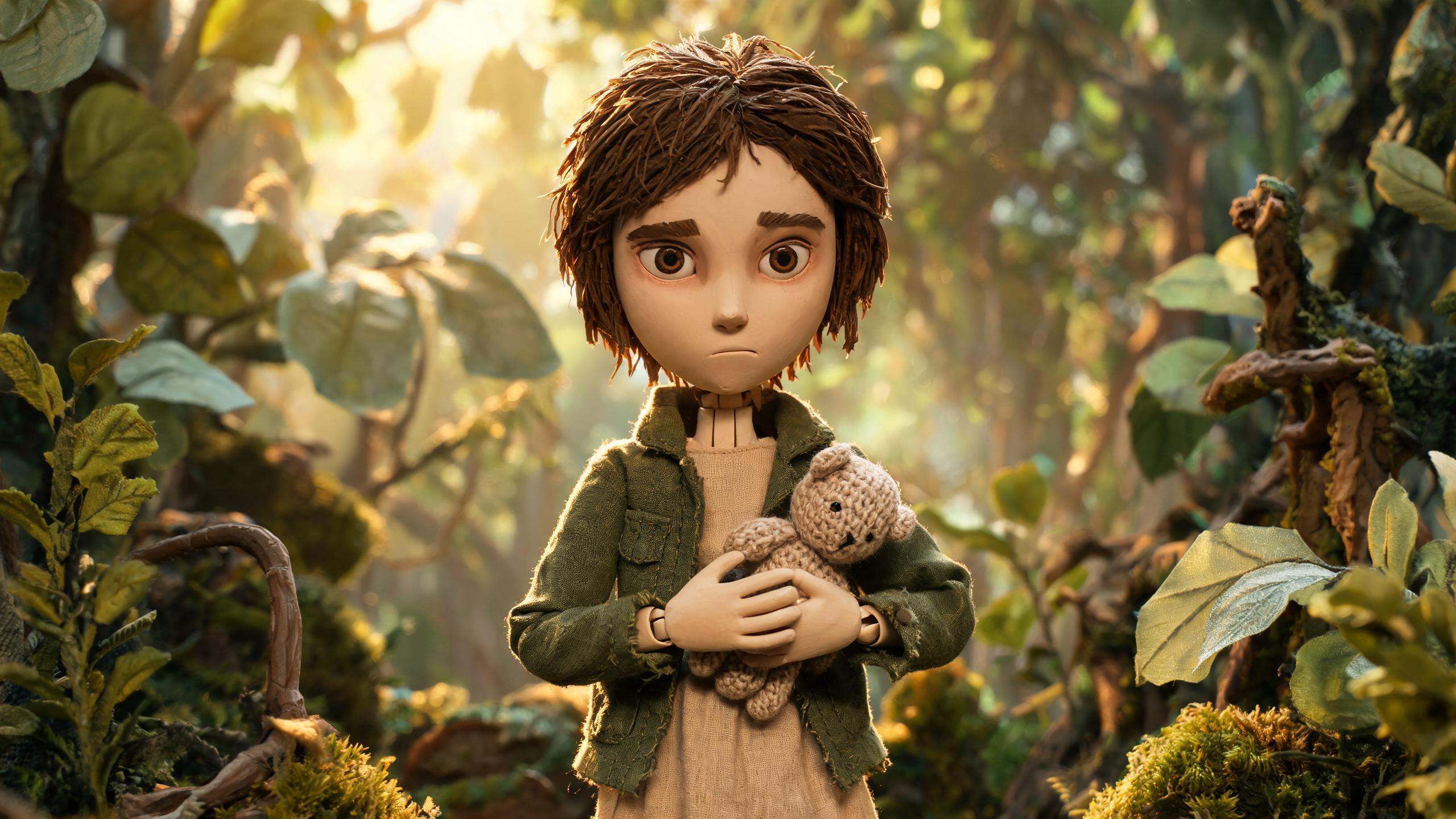
The full trailer for Wildwood arrives as a vivid reminder that stop-motion animation can be both a visual feast and a serious emotional undertaking. The footage centers on Prue McKeel, a determined young heroine who leaves her ordinary life behind to enter a hidden, magical forest. Accompanied by her friend Curtis, Prue’s journey begins as a rescue mission but becomes a deeper exploration of loss and how a child confronts the world after trauma.
From the opening frames the trailer establishes contrast between the small, domestic spaces of Prue’s life and the vast, textured wilds she crosses to find answers. The production favors handcrafted detail. Close-ups linger on the weave of fabrics, the grain of wood, and the imperfections in tiny puppets. Those details matter because they make emotion tangible. Prue’s grief is not abstract. It shows up in the slump of her shoulders, the way light falls across a vacant chair, and in small, quiet moments that the camera treats with the same respect it gives sweeping panoramas.
The forest of Wildwood itself is an elaborate character. The trailer presents it as both wondrous and unsettling. Luminous fungi, overgrown machinery, and a fauna that feels intelligent and sometimes suspicious set a tone of constant discovery. The creatures Prue meets are rendered with a warmth that keeps the story accessible to younger viewers while also carrying an undercurrent that will read differently to adults. That layered approach gives the trailer a sense of scale. It suggests a film that moves easily between childlike curiosity and adult reflection.
Stop-motion as a medium plays a central role in how the film handles grief. There is a physicality to handcrafted puppetry that digital animation does not replicate. Hands grip twigs. Clothes rustle. When Prue reacts, those reactions feel earned because they come from finely calibrated mechanisms and the care of animators manipulating tiny forms. The trailer uses these tactile qualities to emphasize that grief occupies a body as well as a mind. This choice affects pace. Moments that could have become spectacle are held gently, allowing viewers to absorb what the character is feeling.
Visually, the trailer balances warm palettes with colder, muted tones. Domestic scenes lean into soft oranges and afternoon light, while the forest favors deep greens, fogged blues, and sudden bursts of strange color. Cinematography mimics the personal perspective of a child thrust into a bigger world. Camera moves are intimate and deliberate. When the frame opens to reveal the scale of the Wildwood, it is still shot through the eyes of Prue, which keeps the emotional throughline clear. Sound design augments the visuals, with a score that alternates between playful woodwind motifs and quieter strings that underscore loss. Those musical choices help signal when the story sits with grief and when it allows for levity.
The trailer also hints at the moral complexity within the forest. Characters Prue meets do not exist simply to comfort or to threaten. They have their own needs and codes. That ambiguity promises a narrative that treats its characters as full beings rather than archetypes, even when their appearances are fantastical. Friendship is central. Curtis remains at Prue’s side, offering support and an alternate view of courage. Their relationship is framed as mutual rather than rescuing, which gives the rescue mission emotional texture beyond the literal goal.
There are moments in the trailer that point to humor and adventure. Whimsical encounters, quick bursts of chaotic energy, and sequences that foreground inventive creature design remind viewers that the film still wants to delight. Yet those moments never undercut the backbone of the story. Instead they provide relief and context, showing how wonder and grief can coexist. The film looks like it will invite audiences to laugh and then to think, often in the same scene.
Wildwood’s trailer also serves as a celebration of the craft of stop-motion. The lighting, miniature craftsmanship, and the puppets themselves are on full display. For viewers who follow animation closely the trailer functions as proof that the medium continues to push boundaries. The makers seem intent on marrying narrative ambition with painstaking technique. That combination is rare and compelling.
In the end the trailer makes a clear promise. Wildwood intends to deliver a story about grief that respects young viewers and does not shy away from complexity. It positions Prue McKeel and Curtis at the center of a richly imagined environment where every object and creature can speak to memory, longing, and resilience. If the film follows the lead of the trailer it will be a work where technical craft and emotional honesty amplify one another.
Roundup opinion
The Wildwood trailer positions the film as a stop-motion adventure that treats grief as an emotional engine rather than an ornament. It is a bold creative choice to let a child’s sorrow guide a fantastical rescue mission while remaining visually sumptuous and playful. The film promises to be both an exhibition of artisanal animation and a thoughtful story about coping and connection. For audiences curious about what stop-motion can do with mature themes, the trailer suggests Wildwood will be worth watching.









0 Comments