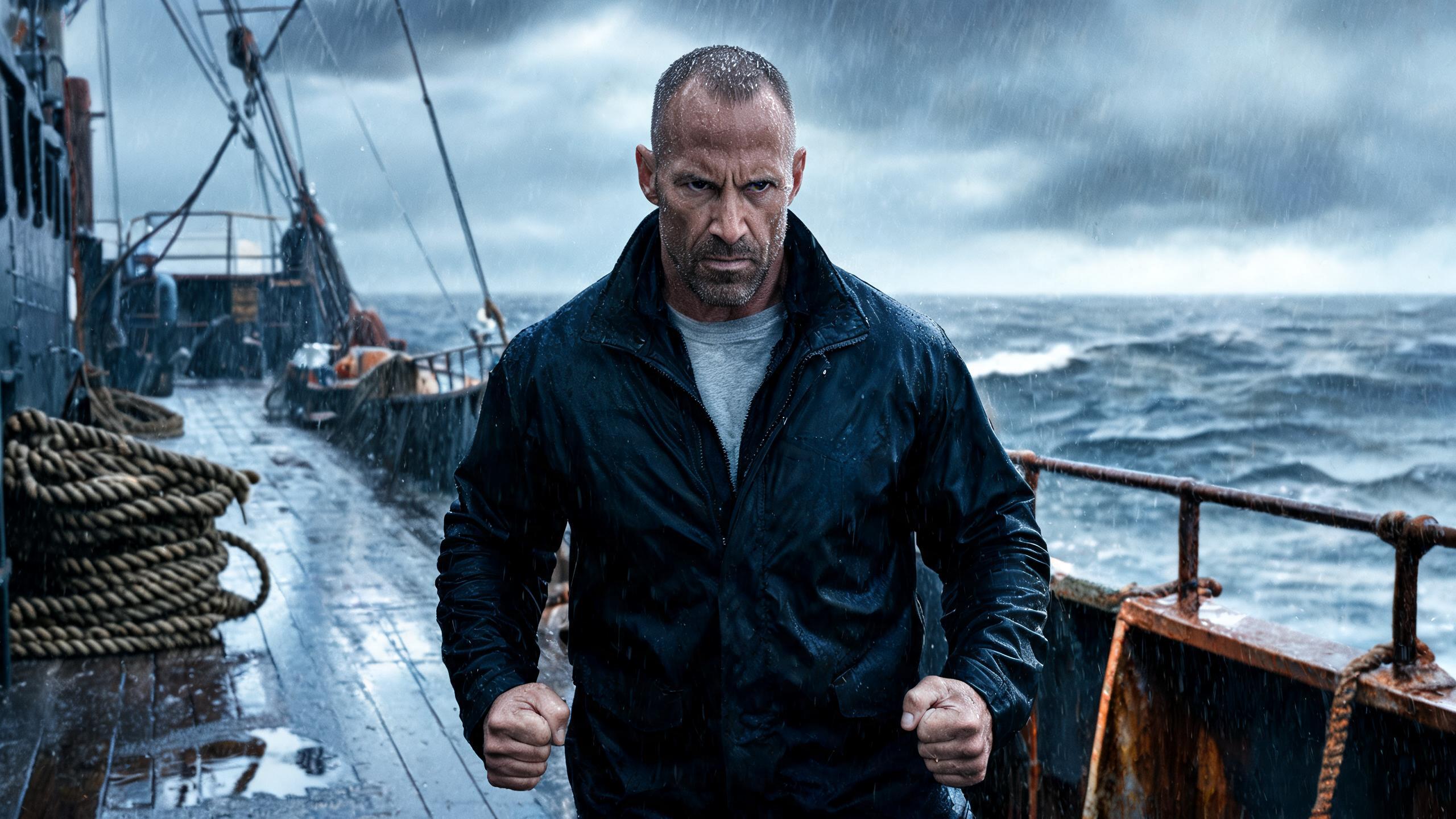
Jason Statham returns to form in Mutiny, a lean, sea-bound action thriller that translates the actor's well known screen persona into a maritime setting. The film keeps the plot economical and the action front and center. Statham plays Marcus Kane, a hardened ship captain whose quiet command is interrupted when a routine crossing becomes a lawless test of survival and loyalty.
The story opens with the trading vessel Sea Lark making a routine run across a treacherous stretch of ocean. Marcus Kane is introduced as a man of few words and quick reflexes. The supporting cast is small and purposeful. Jonah, a wide eyed deckhand, becomes the audience proxy as he learns what Kane already knows about life at sea. Ana Cruz, a port fixer, provides a tether to land and an uneasy moral compass for Kane. The adversary is less a single villain than a mounting series of threats from within and outside the ship, forcing an intimate crew to make hard choices.
Direction and tone lean into genre expectations with an economical style. Director Ethan Cole keeps the camera tight on the vessel and on faces, creating a claustrophobic atmosphere as the ship becomes both battleground and trap. The screenplay favors direct beats over elaborate plotting. Plot twists are functional rather than confounding. The film clearly signals its priorities: build tension, stage fights, and move quickly to the next set piece. For audiences who come for Statham in his element, the structure delivers.
Action choreography is the film's strongest asset. Hand to hand combat, cramped-quarters brawls, and a prolonged sequence on a rain slick deck are staged with clarity and purpose. The film understands what works for Statham, folding in his trademark efficient punches, tactical takedowns, and steady eye contact that sells danger without excess emotion. Practical effects dominate. The result is an immediacy that benefits from minimal cutting and well rehearsed stunt work. A standout scene pins Kane against a small group of assailants as the ship lists, and the sequence succeeds because it is specific, messy, and believable.
The maritime setting is used as more than a backdrop. Weather and ship mechanics are woven into the drama. Tight corridors, swinging rigging, and surging engine rooms create opportunities for inventive staging. Cinematographer Maya Singh captures the film in cool, damp tones, favoring claustrophobic interiors and grey horizons that reinforce the characters' isolation. Sound design is likewise purposeful. The constant groan of the hull and the staccato of rain on metal become part of the tension, punctuating moments of silence and violence.
Performances are straightforward and work within the film's limited emotional range. Statham needs to be convincing as a leader who commands by example and deed. He brings the necessary gravitas and physicality. The younger actors bring a believable nervous energy to the ship's lower decks, which contrasts nicely with Kane's controlled aggression. Ana Cruz anchors some of the film's ethical friction, asking Kane to answer for the consequences of decisions made at sea.
The screenplay does not aim for deep philosophical inquiry. Themes of loyalty, authority, and survival appear in broad strokes. That simplifies the film and keeps it focused on momentum. Some viewers will find the character work undercooked. Secondary figures are sketched more than explored. Yet the pared back approach gives the film a pulpy efficiency. It moves fast, and when it slows it is to reset for the next confrontation.
Mutiny is also economical in runtime. That helps maintain tension but leaves little space for the story to breathe. At times the film leans on familiar beats from past Statham vehicles. Those beats will hit as intended for fans who appreciate the actor's brand of action. For viewers seeking novelty in plot or character, the film will likely feel comfortable rather than revelatory.
The production design and practical effects are notable. The ship feels lived in and functional. Costuming avoids flashy flourishes in favor of workmanlike clothing that supports the film's realism. The score is unobtrusive, rarely calling attention to itself and instead allowing the natural hazards of the sea and the actors' rhythms to set the pace.
Mutiny does what it sets out to do. It places Jason Statham in a contained, maritime environment and stages a series of escalating confrontations that test his character's resolve and skill. It will not rewrite the playbook of modern action cinema, but it does offer a brisk, focused experience that showcases its star and a disciplined production team.
In the end, Mutiny is a serviceable genre entry. Viewers looking for sharp, knockabout action with minimal narrative complication will find satisfaction. Those seeking deeper character study or structural surprises may find it thin. Either way, the film makes a clear bargain and follows through on its promise to deliver Statham at sea doing what he does best.











0 Comments