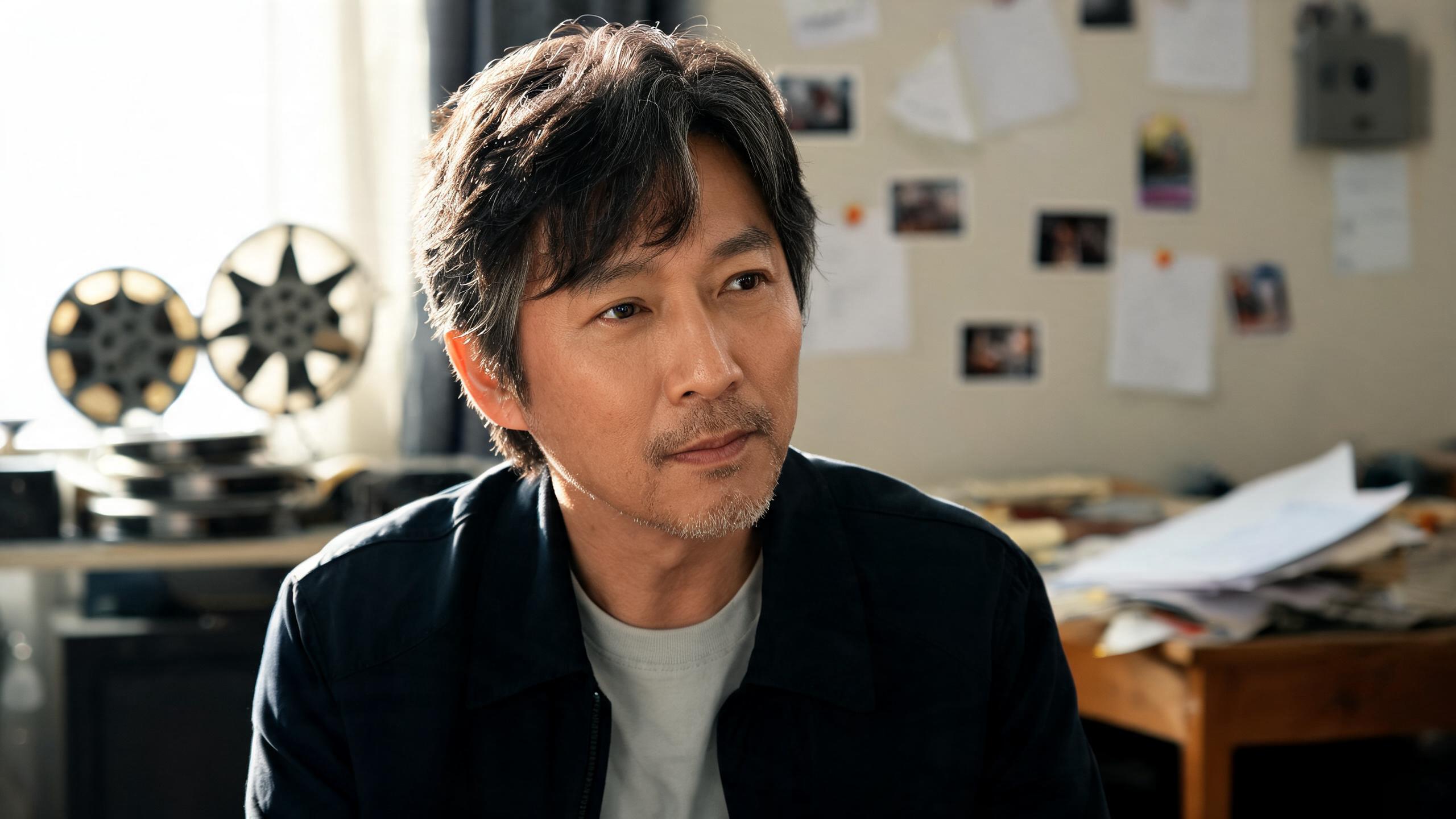
Finlay Pretsell’s film Douglas Gordon by Douglas Gordon arrives as a deliberate and intimate study of an artist who has long challenged how we see moving images. Premiering at the Edinburgh Film Festival, the documentary brackets biography and spectacle to offer a close reading of Gordon’s working life, his wit, and his persistent questioning of what art does. Pretsell presents the artist in his own voice, creating a documentary that feels like a self-portrait constructed with the cooperation of its subject.
Douglas Gordon is a name familiar to audiences who have encountered conceptual interventions that stretch time and expectation. His landmark work 24 Hour Psycho remains a touchstone for conversations about film, memory, and perception. That legacy is the backdrop to Pretsell’s film, which does not rehearse an art world chronology. Instead it tracks the knots of idea and obsession that make up Gordon’s practice, letting the artist map his own preoccupations while Pretsell shapes the material into a narrative thread.
Pretsell described his ambition plainly. This is the mind of a conceptual artist, he said, and the film seeks to open that mind without reducing it to a single explanation. The director’s approach is neither hagiography nor forensic biography. He allows Gordon to speak directly to camera and to the camera, and he intersperses those moments with archival material and scenes from Gordon’s life in studios and on set. The result is a film that privileges process and thought over spectacle, inviting viewers to follow the associative leaps that govern conceptual work.
The film balances intimacy with distance. Gordon comes across as an eccentric but deliberate thinker, someone who can be disarming and exacting in the same sentence. Pretsell resists turning eccentricity into caricature. Instead he frames eccentric behaviour as part of a broader artistic method. Viewers see how humor, repetition, and a fascination with cinematic time function as tools in Gordon’s repertoire. The film highlights the contradictions that keep an artist interesting: a public performer who is private about his personal life, a meticulous planner who embraces accidents, an artist who critiques systems while inhabiting them.
Visually the documentary uses restraint. Pretsell’s camera often sits in the periphery, allowing objects to register as clues to how Gordon thinks. Studio interiors, scattered notes, and film fragments are presented with enough detail to feel lived in but without the exhibitionist polish of promotional pieces. When archival footage appears, it is not used as proof of past triumphs but as evidence of ongoing inquiry. This editing choice foregrounds continuity in Gordon’s practice rather than staging a procession of milestones.
At festival screenings viewers responded to the combination of candor and craft. The film does not attempt to simplify difficult ideas, and some audience members appreciated being addressed as active interpreters. For others the film’s slow, contemplative rhythm required patience. Pretsell’s decision to centre Gordon’s voice means the film sometimes circles questions rather than resolving them. That is the point. The documentary models an attitude toward art that tolerates ambiguity and prefers layered meaning to one line explanations.
Pretsell also touches on the practical and relational aspects of making work. The film shows collaborations, logistical challenges, and the moments when an artwork refuses its maker. These sequences reveal that conceptual art is not simply an intellectual exercise. It is a set of decisions lived out in negotiation with materials, institutions, and collaborators. Gordon emerges as an artist who is both rigorous and playful about those negotiations.
The film will inevitably be read as part of a conversation about how artists present themselves. By inviting Gordon into a format where he can sculpt his own narrative, Pretsell asks viewers to consider how portraits can both reveal and enable identity. The documentary foregrounds the construction of persona without making that construction the sole subject. It keeps returning to the art, to the questions about time, repetition, and perception that underpin Gordon’s practice.
Roundup opinion
Douglas Gordon by Douglas Gordon offers a focused, thoughtful portrait of an artist who has long tested the limits of cinematic experience. Finlay Pretsell’s film is careful rather than grand, exploratory rather than definitive. It will appeal to those interested in the mechanics of contemporary art and to viewers willing to follow an artist’s logic on its own terms. The film does not close the book on Douglas Gordon. Instead it opens a window into the habits of mind that continue to propel his work, leaving viewers with more questions than answers and with an acute sense of why the questions matter.









0 Comments