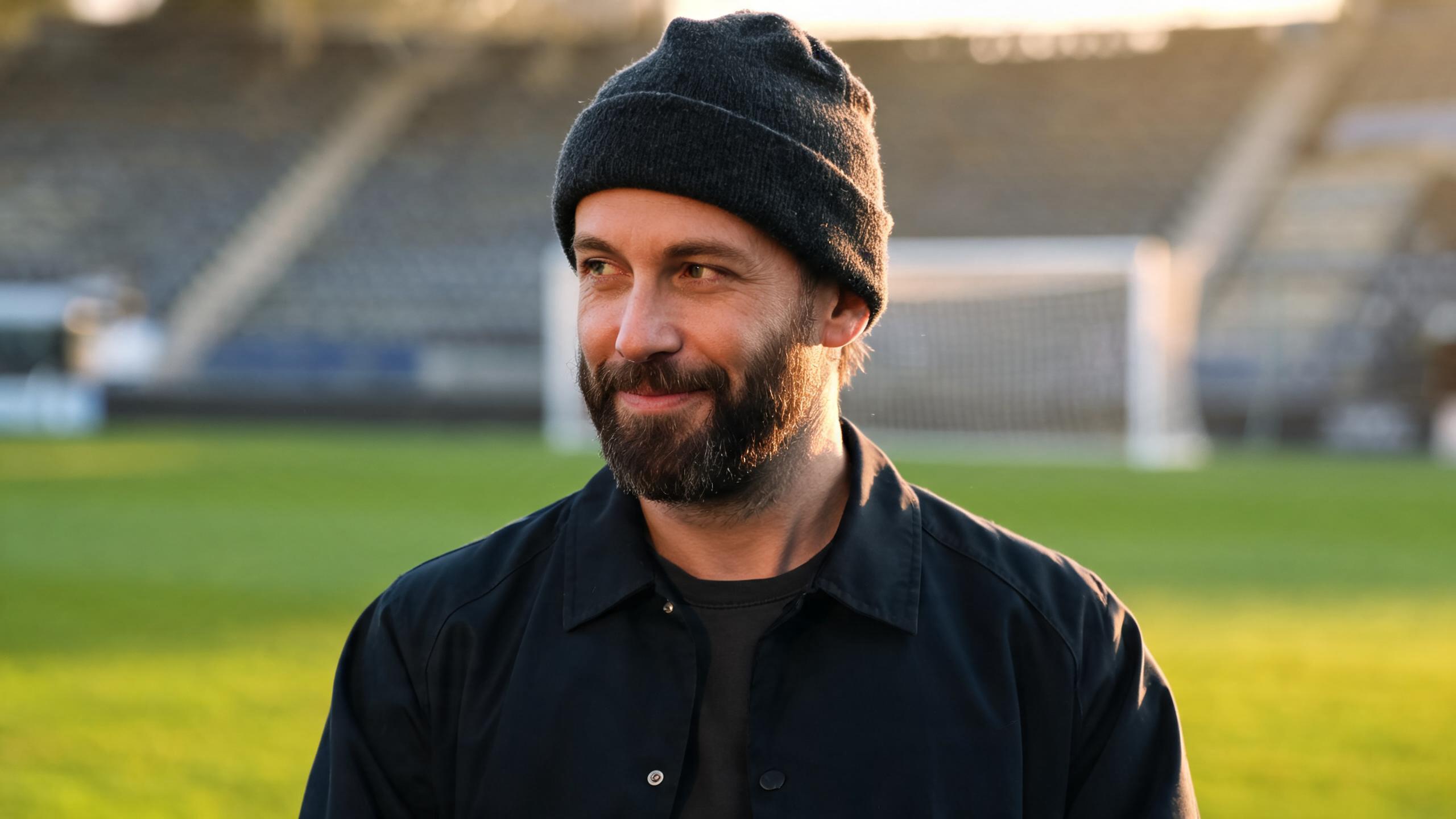
When a supporting character's defining traits start to overshadow everything else they are, fans call it Flanderization. In the case of Coach Beard, the stoic, inscrutable companion to Ted Lasso, many viewers and critics now say that process has arrived. What began as a quietly layered presence has been pushed toward a one-note caricature in later episodes, prompting debate about how long running shows handle beloved minor figures.
Coach Beard came into the series as a deliberate contrast to Ted Lasso's relentless optimism. Played by Brendan Hunt, he was laconic, slyly funny, and possessed of moral ambiguity that kept viewers guessing. Early episodes used restraint, revealing Beard's history and loyalties in small, revealing moments rather than through broad comedic beats. That restraint made him interesting, and it turned him into one of the show's most compelling components.
As the show continued, a shift became visible. Instead of subtle tension and layered silences, newer episodes often leaned into exaggerated physical comedy and repetitive quirks. Beard's oddities were amplified until they frequently read as punchlines rather than character choices. The patient, mysterious coach who once balanced Ted's buoyancy with quiet menace has been reshaped into a comic foil whose unpredictability feels scripted for laughs rather than rooted in credible motivation.
Several patterns illustrate the change. Lines and actions that once revealed character now repeat as shorthand. Scenes that might have deepened Beard's interior life instead play for shock or disorientation. Relationship dynamics that used to produce nuance have been simplified, with his interactions reduced to variations on the same joke. Fans point to moments where Beard's behavior seems to contradict previously established values, or where his presence exists mainly to create chaotic contrast with other characters.
Creative choices behind this shift are likely practical as well as artistic. The series, created by—and often associated with—its titular lead, has grown in scope. Writers and producers face the twin pressures of sustaining audience engagement and maintaining a comedy that can land reliably. Leaning on amplified traits is an economical method to deliver immediate laughter. It is also an easy way to give supporting characters memorable beats in a crowded ensemble.
Brendan Hunt's role behind the scenes complicates the conversation. As one of the show's co-creators and a frequent writer, Hunt helped shape Beard's original contours. That authorship gives weight to the evolution, because it suggests these choices may not be accidental. Fans have taken different views on that. Some interpret the cartoonish turns as deliberate, an experiment in stretching a role to its comic limits. Others hear them as evidence that even creators can lose sight of what made a character resonate once the show grows and the jokes must be sustained on a larger stage.
Reaction across social platforms has been mixed. A portion of the audience welcomes the heightened antics as a source of fresh laughs. For viewers who enjoy bigger, more overt comedy, an amplified Beard fits neatly with episodes that prioritize immediacy over subtlety. Many others, however, express frustration that the enlargement comes at the cost of complexity. They miss the Beard who could be quiet in a locker room yet reveal more in a single glance than many characters do in long speeches.
Critics pointing to Flanderization often emphasize the long-term cost of that move. When supporting characters become caricatures, narrative richness can suffer. Ensemble shows rely on interplay, not only punchlines. Simplifying a character into a catchphrase or a predictable gag reduces the number of possible interactions available to writers, and it compresses a character's potential for growth. That narrowing can make arcs feel flatter and momentary beats less emotionally satisfying.
There are remedies a show can pursue. One path is to restore nuance by returning to quieter scenes that reveal interior life through small actions. Another option is to build arcs that allow the amplified traits to evolve, giving them consequences and context. Either approach asks writers to accept slower-building rewards in return for deeper payoffs. Fans who long for the Beard of earlier seasons are hoping the show's next chapters will choose one of these routes.
The conversation about Coach Beard is a reminder of how fragile supporting characters can be under the weight of a long running series. Flanderization is not always a death knell. Some examples across television show that exaggerated traits can be used intentionally to land specific thematic points. The key is whether those choices are anchored in a broader sense of character. For now, viewers continue to debate whether the show has taken the easy laugh or chosen a new phase for a character who once lived in the margins.
Roundup opinion
This is not a call for reversal for its own sake. Brendan Hunt's performance still offers charisma and moments of genuine mystery. The concern is about balance. If a series prunes a supporting figure until only the quirks remain, it narrows the storytelling palette. Restoring complexity for Coach Beard would not erase the laughs that fans enjoy, but it would likely make those laughs land with greater narrative weight. Whether the creative team will pursue that balance remains to be seen, and many viewers are watching closely to see which path the show takes next.







0 Comments