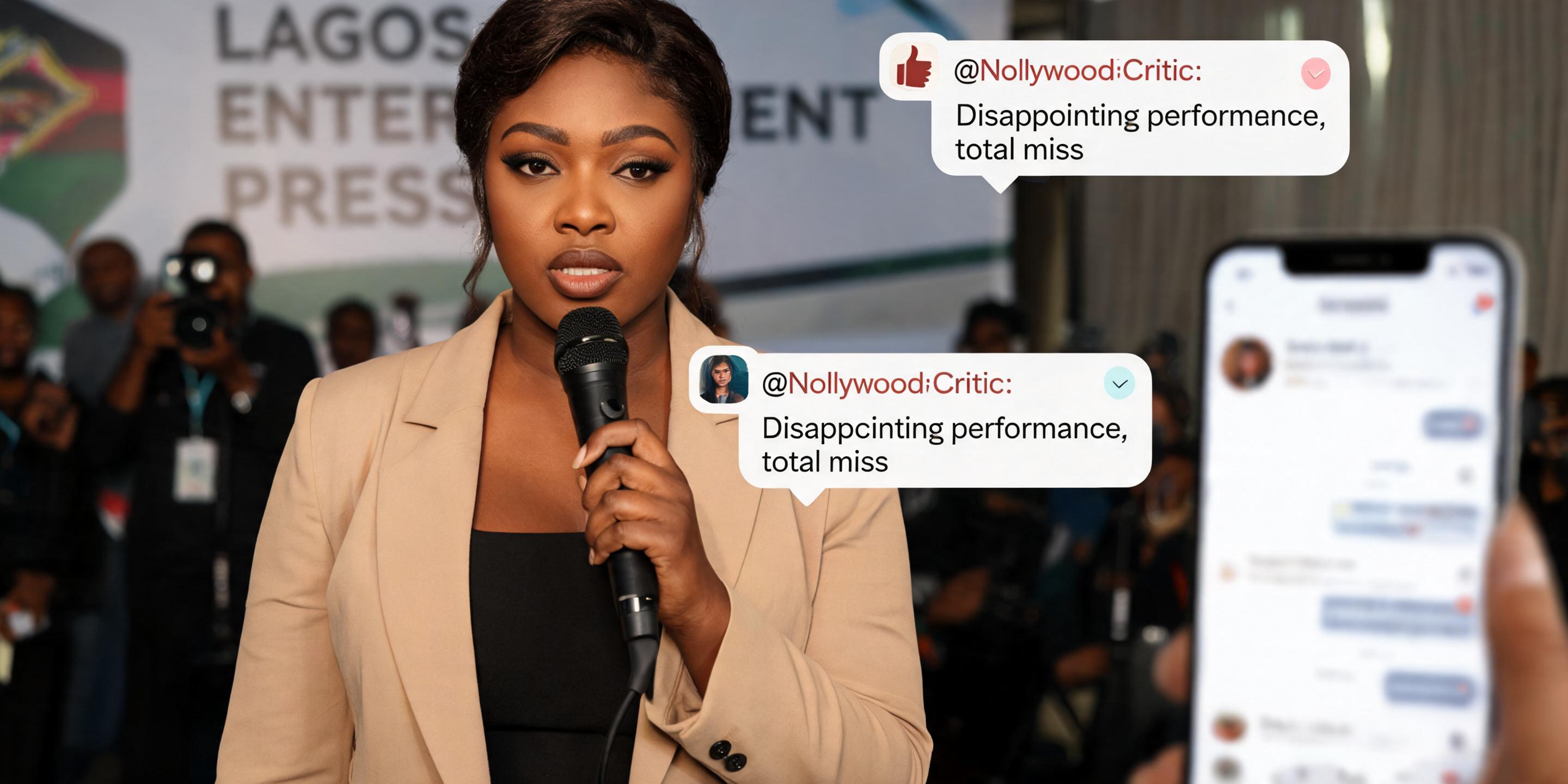
Eniola Ajao has publicly responded to a critic who described her acting as "plastic," rejecting the characterization and urging a more informed discussion about performance in film and television. The exchange played out on social media on September 25, 2026, drawing reactions from fans and peers across the industry.
The criticism originated from a social media post that labeled Ajao's performances as lacking authenticity. The remark quickly circulated, prompting debate about standards for acting and the role of online commentary in shaping public perception. Ajao addressed the critique directly, dismissing the term "plastic" as an unfair reduction of years of training and work. She stressed the importance of context when evaluating a role, noting that choices on screen are often shaped by directors, scripts, and production constraints.
Several colleagues and members of the public added to the conversation by defending the complexity of acting as a craft. While some voices echoed the critic's view, many highlighted Ajao's range across drama and comedy and pointed to specific roles that demonstrated emotional depth and subtlety. Industry insiders used the moment to remind audiences that a single performance rarely defines an actor's entire body of work.
The exchange also renewed attention on how critics and performers interact on social platforms. Social media allows immediate feedback but can flatten nuanced discussion into short, provocative statements. For performers like Ajao, rapid public critique can feel personal even when aimed at a single role. The incident prompted calls for critics to provide more detailed assessments and for audiences to consider the collaborative nature of filmmaking.
For her part, Eniola Ajao framed her response around professionalism and resilience. She accepted critique as part of a public career while pushing back against language she saw as dismissive. Her response emphasized learning and engagement rather than escalation, a stance that resonated with many supporters.
The exchange underscores a broader conversation about criticism, context, and respect in creative fields. As actors continue to engage with audiences online, moments like this illustrate the need for clearer conversation about what constitutes fair evaluation of artistic work. The debate around Ajao’s performance is likely to persist, but it also offers an opportunity for more thoughtful dialogue about craft and critique.




0 Comments