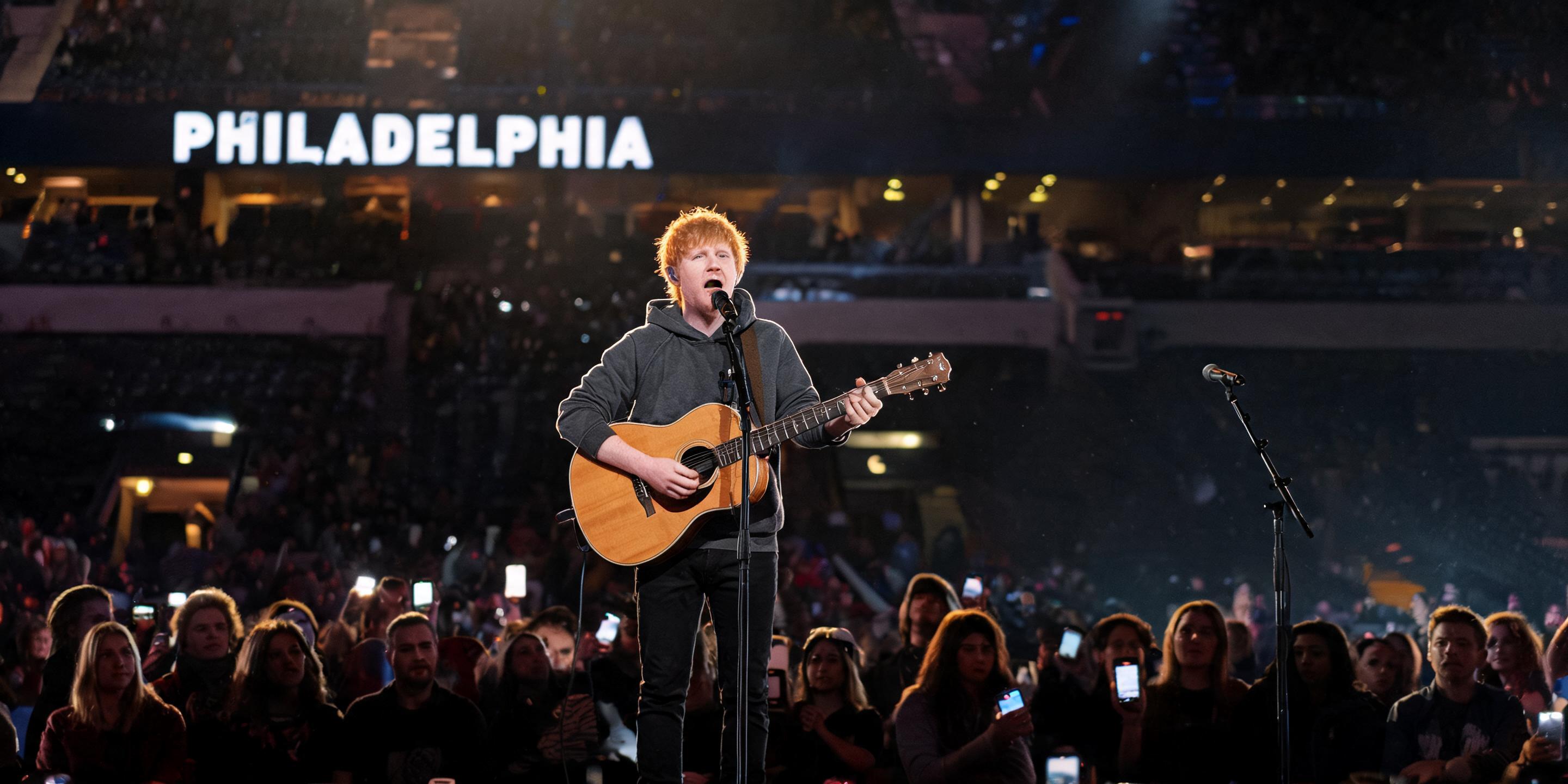
At a recent Philadelphia stop on his world tour, Ed Sheeran posted an apology after a planned onstage appearance by Macklemore did not take place. The message, meant to address fans upset by the change, drew attention for balancing regret with explanations about logistics and last-minute adjustments.
Sheeran said he was sorry for the disappointment and frustration some fans felt when the guest moment did not happen. In the same message he described the realities of staging a large-scale show, noting that roster changes and timing issues can force immediate decisions. Fans who were present at the venue said a segment that had been teased in advance did not occur, and many took to social media to express their confusion and disappointment.
Reactions split between appreciation and criticism. Some concertgoers thanked Sheeran for explaining the circumstances and acknowledged the pressures of touring. Others felt the apology did not fully accept responsibility, interpreting references to logistical challenges as a way of sharing blame rather than offering an unreserved apology. No detailed accounting of what exactly prevented the planned appearance was provided in the public statement, and there was no immediate, public response from Macklemore.
The episode highlights the delicate expectations around surprise guests and advertised collaborations at live events. Organizers, headline artists, and fans often operate with different timeframes and priorities. For a crowd paying for a promised moment, the absence can feel significant. For touring artists and crews managing complex schedules and permissions, the options to adjust on short notice are limited.
Future shows may see promoters and artists set clearer expectations up front, either by avoiding explicit promises for surprise appearances or by confirming backup plans that are communicated quickly when changes occur. For fans, the incident is a reminder that live performances carry inherent unpredictability.
Roundup opinion: The situation underscores a perennial live-music tension between surprise and reliability. Clear, prompt communication after a change tends to calm audiences more effectively than explanations that appear to divide responsibility. Artists and promoters who prioritize transparency will likely preserve goodwill even when plans shift at the last minute.










0 Comments