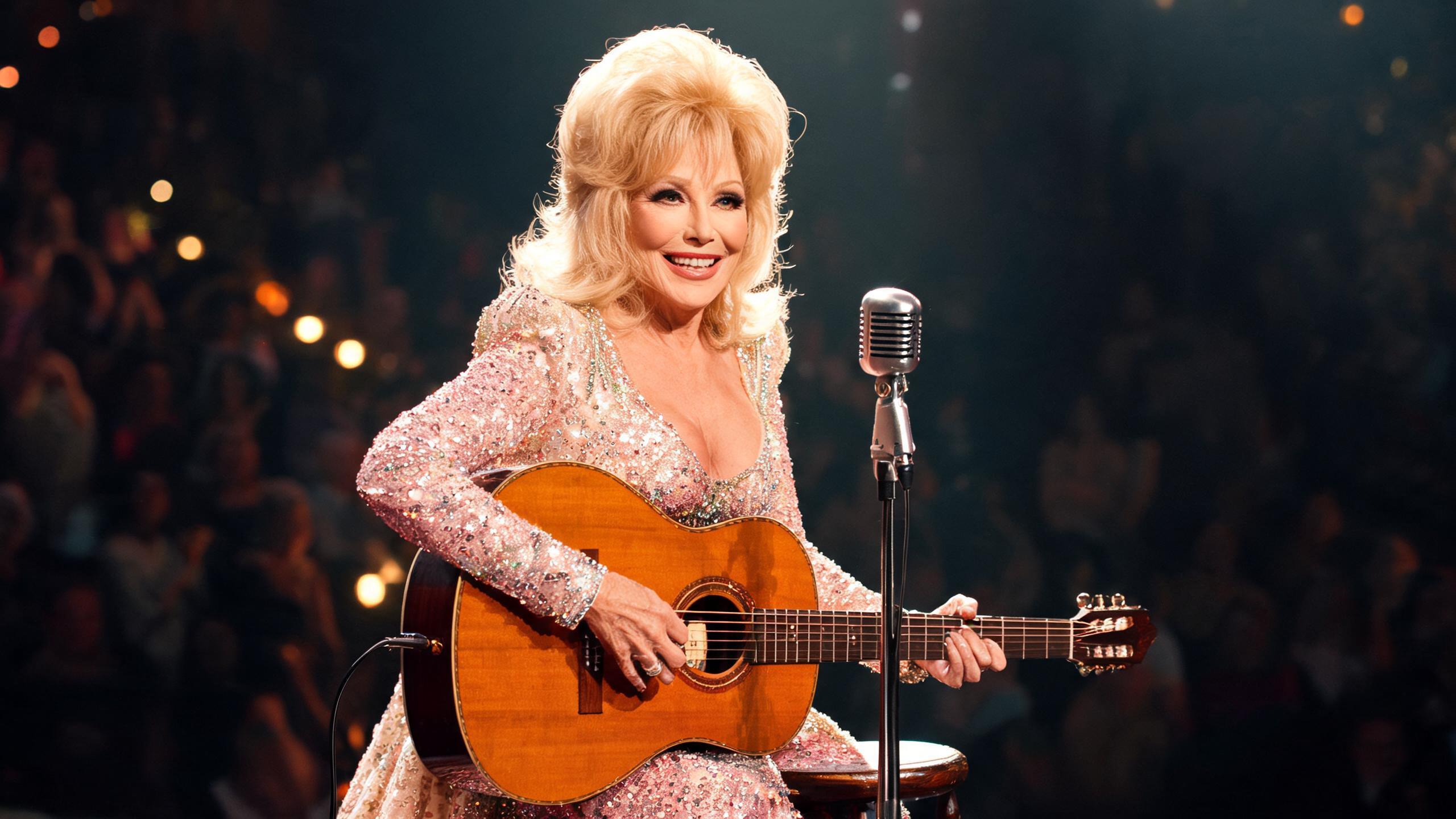
Dolly Parton is a name that has moved through popular culture for more than half a century. Her career began in small venues and radio stations in Tennessee and grew into a body of work that spans hit country records, film and television roles, business ventures and nationwide philanthropic programs. This retrospective traces the arc of her public life, the decisions that shaped it, and how newer generations continue to reinterpret her work.
Parton rose to visibility in the 1960s and early 1970s with a clear songwriting voice. Early collaborations with Porter Wagoner helped introduce her to a national country audience. Songs she wrote during this period showed an economy of language and a strong emotional core. Titles such as Jolene and I Will Always Love You became standards. Those recordings combined the narrative directness of country music with melodies that translated beyond genre boundaries. The success of these songs established her not only as a performer but as a songwriter with rare reach.
The 1970s also marked Parton finding an image that matched her music. She adopted a stage persona that was both theatrical and fiercely controlled. That persona drew attention, and she leaned into it while expanding the scope of her work. She made frequent television appearances, including late night shows, and began to cross into mainstream pop charts. Collaborations and duets with other country stars widened her audience, and she took steady steps toward a broader pop crossover without losing the songwriting strengths that defined her early career.
By the late 1970s and early 1980s Parton moved into film and mainstream entertainment. The film 9 to 5 gave her a new platform. It combined a solid script with a charting title song that captured workplace frustrations in a catchy, radio friendly form. Her acting in that film introduced her to audiences who might not follow country music. Television and variety appearances kept her in view. Her interviews on major talk shows helped cement a public image that mixed humor and business acumen. Appearances on shows hosted by Johnny Carson are still remembered for their mix of banter and performance and helped to present a personable side to a carefully constructed public persona.
Across these moves, Parton built business ventures that would turn a musician into a brand. Dollywood emerged as a theme park rooted in the culture of eastern Tennessee. The park expanded into a complex of hospitality and entertainment projects that created jobs and became intertwined with the Parton name. At the same time she pursued film and television projects, record deals and tour schedules. The business side of her career showed an ability to translate artistic identity into sustained economic activity.
Equally important has been Parton’s philanthropic work. The Imagination Library, a program providing free books to children, reached communities across the United States and beyond. Her philanthropic activity is often described in terms of scale and consistency. In combination with the jobs created by her business ventures, these efforts added a civic dimension to her public life and broadened the ways people measure her influence.
Parton’s music has also been subject to reinterpretation. Covers and new recordings have introduced her songs to younger listeners. A recent cover of 9 to 5 by a contemporary pop artist served as one example of how a song tied to a particular cultural moment can be refreshed. Whitney Houston’s rendition of I Will Always Love You reimagined the song for a different market and solidified the original composition as a modern standard. These reinterpretations allow the original melodies and lyrics to reach listeners who might not be familiar with Parton’s full catalog.
Throughout the decades the public conversation around Parton has included her style choices and public persona. Observers have noted how she managed image and message to maintain career longevity. Whether through big hair and sequins or carefully crafted interviews, Parton maintained control over how she presented herself. That control extended into decisions about which projects to pursue and how to build the business around her artistic work.
Looking at the arc of her career reveals continuities as well as adaptations. Songwriting remains central. Public performance continues to anchor her identity. Business and philanthropy broadened the places where her name appears in public life. New generations of artists and audiences respond to her work through covers, film projects and streaming releases. Television appearances remain memory markers of different eras of her career.
Dolly Parton’s career provides a case study in artistic reinvention without wholesale abandonment of core craft. Her music, her acting and her civic projects have intersected in ways that kept her relevant to audiences across decades. The through line is the songs, written and performed with a sense of story. That consistency, paired with a readiness to explore film, television and community programs, explains why Parton remains a figure in both popular culture and public life.
Roundup opinion
Assessing a career that spans generations is not a matter of choosing favorites. What stands out is the coherence between songwriting and public action. Dolly Parton kept a writer’s sensibility at the center while growing into roles that could have diluted that focus. Instead she used those roles to broaden the audience for the songs. In doing so she created a model for artists who want to expand into other domains while keeping the craft of songwriting as the foundation of their work.
0 Comments